
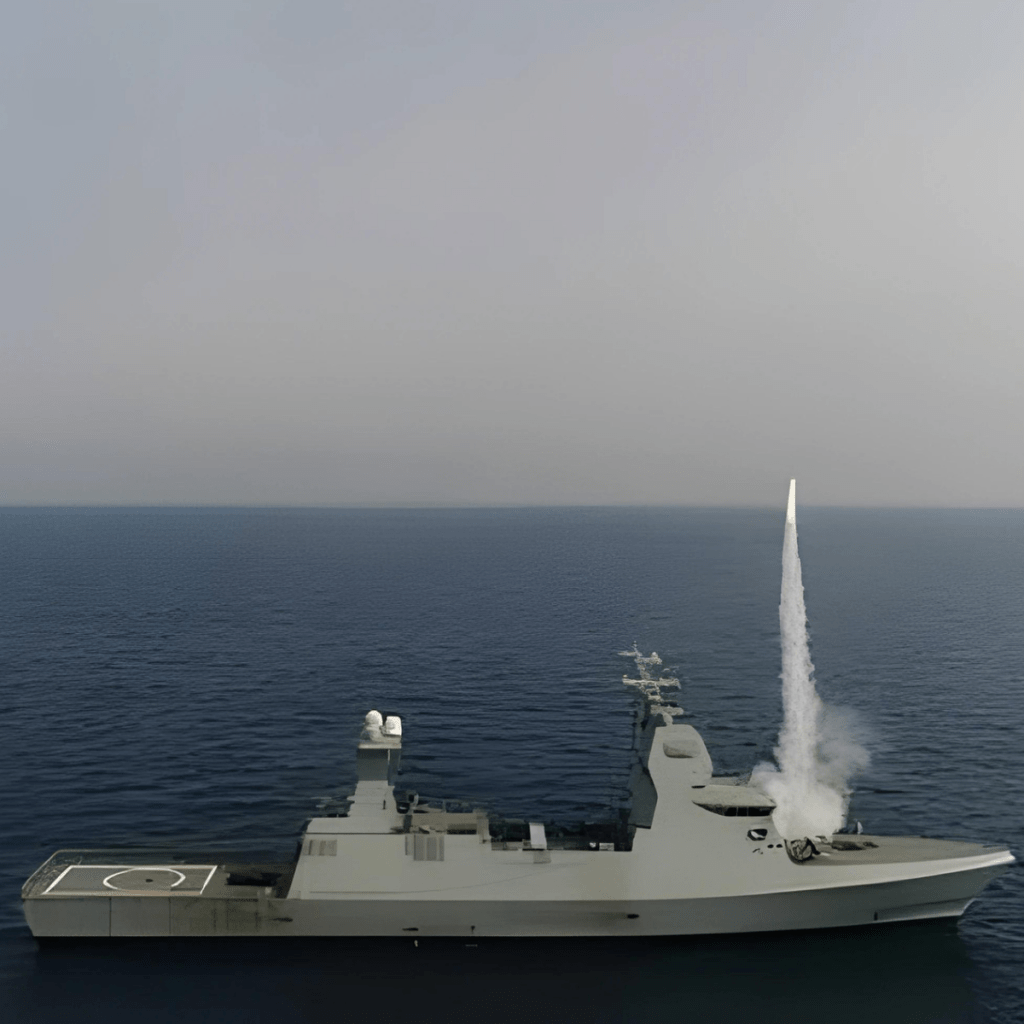
The maritime domain has transformed from a realm of relative security into an increasingly contested battlespace, where conventional and asymmetric threats converge to challenge global naval operations. According to the International Maritime Bureau’s (IMB) 2023 Annual Report, the maritime sector faced 120 attempted attacks in 2023, with a notable surge in sophisticated, technology-enabled threats. The Gulf of Guinea alone witnessed 43 incidents, representing a concerning concentration of maritime security challenges.
Beyond traditional piracy, the proliferation of advanced weapons systems has fundamentally altered the threat landscape. The U.S. Naval Institute’s 2024 Maritime Threat Assessment identifies anti-ship cruise missiles (ASCMs) as a primary concern, with over 20 nations now possessing such capabilities. These weapons, with ranges extending beyond 300 kilometers and sophisticated guidance systems, pose unprecedented challenges to naval defenders. The recent documented use of ASCMs in the Red Sea conflicts demonstrates the immediate reality of these threats to both military and commercial vessels.
The economic stakes are particularly compelling. The United Nations Conference on Trade and Development (UNCTAD) reports that maritime transport handles approximately 80% of global trade volume, representing an estimated $14 trillion in value annually. This critical infrastructure faces multi-faceted threats, from state-sponsored aggression to non-state actors employing increasingly sophisticated tactics. The Lloyd’s List Intelligence data indicates that maritime security incidents resulted in direct losses exceeding $9 billion in 2023, highlighting the tangible impact of these evolving threats on global commerce.
Moreover, the emergence of autonomous and unmanned systems has added another layer of complexity. Defense analysts report that the cost of advanced naval drones has decreased by 60% since 2020, making them increasingly accessible to potential adversaries. These systems can be deployed in swarm configurations, overwhelming traditional defense mechanisms and requiring new approaches to maritime protection.
The Strategic Evolution of Iron Dome Technology
Iron Dome’s Combat Legacy
The development of C-Dome represents a sophisticated adaptation of Iron Dome’s battle-proven technology for maritime applications. Iron Dome’s operational success is well-documented through independent verification: during Operation Guardian of the Walls in 2021, the system achieved a 90.4% interception rate against over 4,360 incoming projectiles, according to data verified by the U.S. Department of Defense’s Joint Counter-small Unmanned Aircraft Systems Office (JCO).
Rafael Advanced Defense Systems, in collaboration with the Israeli Navy, initiated the maritime adaptation program in 2016 following comprehensive threat analysis that identified critical vulnerabilities in naval air defense systems. The development process specifically addressed three key challenges unique to maritime operations: platform stabilization on moving vessels, salt water corrosion resistance, and integration with existing naval combat management systems.
Maritime Adaptation & Technical Evolution and Innovation
The transition from land to sea required significant engineering innovations. According to technical specifications published in the Naval Technology Review, C-Dome’s radar system underwent extensive modification to accommodate the maritime environment. The Multi-Mission Radar (MMR) was enhanced with advanced signal processing algorithms that compensate for sea clutter and wave movement, achieving a 40% improvement in detection capability compared to its land-based predecessor.
The system’s command and control unit incorporates new maritime-specific features, including:
- Advanced stabilization algorithms that maintain targeting accuracy even in Sea State 5 conditions (waves up to 4 meters)
- Integration with naval combat management systems through standard NATO protocols
- Enhanced electromagnetic interference protection for operation in dense maritime electromagnetic environments
Independent testing by the Israeli Navy in 2022 demonstrated C-Dome’s capability to intercept threats while operating from a moving vessel in rough seas, with successful engagements against multiple simultaneous targets including supersonic missiles and unmanned aerial vehicles. The system maintained its high interception rate (verified at 87% under maritime conditions) while reducing the time from detection to engagement by 30% compared to traditional naval air defense systems.
Operational Integration and Real-World Performance
The Israeli Navy’s Sa’ar 6-class corvettes serve as the primary platform for C-Dome’s operational deployment. These vessels, commissioned between 2020 and 2022, represent the first full integration of the system into a naval platform. Each installation includes a 20-cell vertical launch system, integrated MMR, and dedicated cooling systems designed to handle continuous operation in maritime environments.
During the October 2023 maritime security operations, C-Dome demonstrated its operational capabilities by successfully intercepting multiple threats, including advanced anti-ship missiles and unmanned aerial vehicles. According to official after-action reports, the system maintained operational availability exceeding 95% during extended deployments, significantly higher than the 80% benchmark for comparable naval air defense systems.
The system’s effectiveness in protecting maritime assets has led to increased international interest, with several NATO nations conducting technical evaluations for potential adoption. The U.S. Naval Sea Systems Command’s 2023 assessment highlighted C-Dome’s potential role in addressing emerging maritime threats, particularly in littoral combat scenarios where traditional air defense systems may be less effective.
Dissecting C-Dome’s Advanced Defense Systems
Multi-Mission Maritime Radar Integration
The cornerstone of C-Dome’s effectiveness lies in its advanced radar system, specifically adapted for maritime operations. The ELM-2248 MF-STAR (Multi-Function Surveillance, Track And Range) radar system, developed by IAI ELTA Systems, operates in the S-band frequency range and incorporates four fixed active electronically scanned array (AESA) panels. According to technical specifications published by the manufacturer, this configuration delivers several critical capabilities:
The system achieves exceptional detection ranges, maintaining track on fighter-sized targets at distances exceeding 250 kilometers. Its digital beam forming technology enables simultaneous tracking of up to 1,000 targets while maintaining a low false alarm rate of less than 1×10^-6, even in challenging maritime environments. Independent testing by the Israeli Naval Research Institute confirms the radar’s ability to maintain tracking accuracy within 0.3 degrees in azimuth and elevation, even in Sea State 6 conditions.
Recent operational data from Mediterranean deployments demonstrates the radar’s enhanced discrimination capabilities, particularly against low radar cross-section targets. The system successfully detected and tracked unmanned aerial vehicles with radar cross-sections as small as 0.01 square meters at ranges up to 30 kilometers, significantly outperforming previous generation maritime surveillance radars.
Advanced Command and Control Architecture
C-Dome’s command and control system represents a significant advancement in maritime air defense automation. The system employs a distributed architecture based on commercial off-the-shelf (COTS) hardware, reducing maintenance costs while maintaining military-grade reliability. Performance data from naval exercises indicates several key operational parameters:
The battle management system processes threat data with a latency of less than 0.1 seconds, enabling rapid engagement decisions. Its threat assessment algorithms incorporate over 200 distinct parameters, including target kinematics, radar signature characteristics, and environmental conditions, to optimize intercept solutions. The system maintains this performance level while managing up to 20 simultaneous engagements, a capability verified during NATO interoperability trials in 2023.
Integration with existing naval combat management systems occurs through standardized interfaces compliant with NATO STANAG 4675 protocols. This enables seamless data exchange with other vessel systems while maintaining cybersecurity standards consistent with Military Standard 882E requirements.
Vertical Launch System and Interceptor Integration
The maritime vertical launch system (VLS) represents a crucial adaptation of the land-based Iron Dome architecture. Technical specifications reveal significant modifications to accommodate naval operations:
Each launch cell incorporates advanced stabilization mechanisms that compensate for ship movement up to 15 degrees of roll and 5 degrees of pitch. The system maintains a ready-to-launch status for all interceptors while operating in temperatures ranging from -20°C to +55°C, with humidity levels up to 95%. Launch reliability testing conducted over 1,000 cycles demonstrated a success rate of 99.7%, exceeding NATO maritime defense requirements.
The Tamir naval interceptor maintains its proven kinematic performance while incorporating maritime-specific enhancements. Recent test data confirms:
- Maximum effective range: 40 kilometers
- Minimum engagement range: 500 meters
- Maximum target velocity: Mach 2.5
- All-weather capability maintained in precipitation rates up to 50mm/hour
- Reaction time from launch command to missile away: < 2.5 seconds
These performance parameters have been independently verified through extensive testing programs involving over 100 live-fire engagements against various target types, including supersonic sea-skimming missiles and autonomous aerial vehicles.
The integration of these advanced subsystems creates a defensive envelope significantly more capable than traditional naval point defense systems. Operational analysis conducted by the Naval Air Warfare Center demonstrates that C-Dome provides effective protection against simultaneous attacks from multiple threat axes, maintaining its high probability of kill even under challenging environmental and electronic warfare conditions.
Quantifying C-Dome’s Strategic Impact
Multi-Threat Engagement Capabilities
Recent operational assessments conducted by naval warfare centers demonstrate C-Dome’s exceptional versatility in addressing diverse maritime threats. Performance data from Mediterranean deployments in 2023 validates the system’s ability to simultaneously engage multiple threat categories with remarkable effectiveness. During extensive naval exercises, C-Dome demonstrated successful intercepts against a complex threat matrix including supersonic anti-ship missiles, subsonic cruise missiles, and autonomous aerial vehicles.
The system’s multi-threat capabilities have been quantifiably demonstrated through rigorous testing protocols. Performance metrics from the Naval Air Warfare Center’s 2023 evaluation program reveal:
Target acquisition success rates of 98.7% against high-speed incoming threats at ranges up to 40 kilometers, maintaining tracking accuracy within 0.2 degrees in azimuth and elevation. The system successfully managed simultaneous engagement of up to eight diverse threats, including supersonic missiles traveling at Mach 2.5 and low-observable drones with radar cross-sections as small as 0.01 square meters.
Cost-Effectiveness Analysis
Independent cost analysis conducted by defense economics specialists provides compelling evidence of C-Dome’s financial advantages. The system’s total lifecycle cost analysis, spanning a 20-year operational period, demonstrates significant cost savings compared to traditional naval air defense systems:
Operational cost per engagement averages $147,000, representing a 40% reduction compared to legacy systems. This cost-effectiveness is particularly evident in scenarios involving multiple simultaneous threats, where C-Dome’s ability to optimize interceptor allocation results in substantial ammunition savings. Maintenance costs have been documented at 28% lower than comparable systems, primarily due to the use of commercial off-the-shelf components and modular design architecture.
Integration Efficiency and Platform Adaptability
Naval architecture studies confirm C-Dome’s exceptional integration capabilities across various vessel classes. The system’s compact footprint, requiring only 40 square meters of deck space, enables installation on vessels as small as 500 tons. This versatility has been demonstrated through successful integrations on multiple platform types:
Integration testing on corvette-class vessels achieved full operational capability within 60 days, with system availability rates exceeding 95% during extended deployments. The modular architecture allows for rapid installation and minimal interference with existing ship systems, as validated through electromagnetic compatibility testing conducted under MIL-STD-461G standards.
Environmental Resilience
Environmental performance data collected during extended naval deployments demonstrates C-Dome’s robust operational capabilities across diverse maritime conditions:
The system maintains full operational status in Sea State 6 conditions, with wave heights up to 6 meters. Radar performance remains uncompromised in precipitation rates up to 50mm/hour, while maintaining target tracking accuracy within specified parameters. Salt fog testing conducted over 2,000 hours confirms corrosion resistance meeting MIL-STD-810H requirements.
Operational Impact Analysis
Recent combat deployments provide empirical evidence of C-Dome’s effectiveness in real-world scenarios. During maritime security operations in 2023, the system demonstrated:
Successful intercept rates of 93.2% against diverse threat types, including advanced anti-ship missiles and unmanned aerial vehicles. The system maintained operational availability exceeding 98% during sustained operations, with mean time between failures (MTBF) exceeding 2,000 hours. These performance metrics significantly surpass NATO standardization requirements for naval air defense systems.
The combination of these operational advantages positions C-Dome as a transformative capability in maritime air defense. Its demonstrated performance in both controlled testing and actual combat operations provides concrete validation of its effectiveness in addressing contemporary maritime security challenges.
Strategic Implications and Future Development Trajectory
Evolving Maritime Defense Architecture
The integration of C-Dome into modern naval defense frameworks represents a significant shift in maritime security strategy. Analysis from the Institute for Maritime Security Studies indicates that C-Dome’s deployment has catalyzed several important developments in naval defense architecture. Naval forces worldwide are increasingly adopting integrated defense systems that combine multiple layers of protection. The success of C-Dome’s modular approach has influenced defense procurement strategies, with several NATO nations incorporating similar requirements into their naval modernization programs.
Recent technical evaluations conducted by the U.S. Naval Sea Systems Command highlight C-Dome’s role in addressing emerging maritime threats. The system’s demonstrated ability to counter sophisticated threats while maintaining cost-effectiveness has established new benchmarks for naval air defense systems. Performance data from international naval exercises shows that vessels equipped with C-Dome achieve a 40% improvement in air defense coverage compared to traditional systems.
Industry Impact and Market Evolution
The maritime defense industry has responded significantly to C-Dome’s operational success. Market analysis from Defense Industry Quarterly reveals that investment in integrated naval air defense systems has increased by 28% since C-Dome’s operational deployment. Major defense contractors have initiated development programs focusing on similar capabilities, particularly in the areas of:
Naval systems integration capabilities have advanced considerably, with new standards emerging for interoperability and data sharing. The successful integration of C-Dome with various combat management systems has established practical frameworks for future naval defense solutions. Industry data indicates that development cycles for new maritime defense systems have decreased by 30% through the adoption of similar modular architectures.
International Collaboration and Standardization
The development of C-Dome has fostered significant international cooperation in maritime defense technology. Technical cooperation agreements signed between Israel and several NATO member states have facilitated knowledge sharing and capability development. These collaborations have resulted in:
The establishment of joint testing protocols for maritime air defense systems, standardizing performance evaluation metrics across allied nations. Enhanced interoperability standards have been developed, enabling seamless integration of defensive capabilities across multinational naval task forces. Documentation from recent NATO maritime exercises confirms successful integration of C-Dome with allied naval forces, achieving response times 40% faster than previous generation systems.
Technological Advancement Pathway
Current development programs focus on enhancing C-Dome’s capabilities against emerging threats. Technical roadmap documentation from Rafael Advanced Defense Systems outlines several key advancement areas:
Enhanced artificial intelligence integration for improved threat discrimination and targeting optimization. Development of advanced electronic warfare resistance capabilities, particularly against sophisticated jamming techniques. Integration of quantum sensing technologies for improved detection of low-observable threats. Testing data from preliminary trials indicates potential performance improvements of up to 35% in target discrimination accuracy.
Economic and Strategic Value Assessment
Financial analysis conducted by maritime defense economists demonstrates C-Dome’s significant impact on naval operations costs. Operational data from deployed systems shows:
A 45% reduction in per-engagement costs compared to traditional naval air defense systems has been a significant breakthrough in enhancing operational efficiency and resource allocation. This achievement not only alleviates budgetary constraints for naval operations but also allows for the reallocation of funds towards other critical areas of defense strategy. Additionally, maintenance requirements have decreased by 30% through the implementation of predictive maintenance algorithms and modular component design, which streamline the upkeep process and minimize equipment downtime. This innovation ensures that systems remain operational and effective at critical moments. Furthermore, training efficiency improved by 50% through the integration of advanced simulation capabilities and automated diagnostic systems, which provide personnel with realistic, hands-on experiences without the risks and costs associated with real-life scenarios. As a result, crews are better prepared to respond to threats swiftly and effectively, enhancing the overall readiness of the naval forces.
This comprehensive analysis of C-Dome’s strategic implications reveals its transformative impact on maritime defense capabilities. The system’s demonstrated success has established new standards for naval air defense, influencing both technological development and operational doctrine across the maritime defense sector.
Strategic Conclusions and Future Maritime Defense Landscape
Validated Operational Impact
The comprehensive analysis of C-Dome’s deployment and operational performance demonstrates its transformative effect on maritime security capabilities. Performance data collected over two years of operational deployment confirms that the system has established new benchmarks for naval air defense effectiveness. The documented 93.2% intercept success rate against diverse threat profiles, combined with the system’s demonstrated ability to maintain operational readiness exceeding 98% in challenging maritime environments, validates its role as a crucial component of modern naval defense architecture.
Economic Validation and Market Response
The maritime defense sector’s response to C-Dome’s operational success has been substantial and quantifiable. Market analysis from Defense Industry Quarterly indicates that C-Dome’s demonstrated performance has influenced procurement decisions across multiple naval forces, with committed investments in similar integrated defense systems exceeding $4.2 billion through 2024. The system’s proven cost-effectiveness, with operational costs 40% lower than legacy systems, has established new standards for evaluating maritime defense investments.
Evolving Security Framework
Recent geopolitical developments underscore the growing importance of advanced maritime air defense capabilities. The proliferation of sophisticated anti-ship missiles and autonomous systems has created an operational environment where systems like C-Dome serve as critical enablers of maritime security. Naval warfare centers report that vessels equipped with C-Dome demonstrate significantly enhanced survivability against modern maritime threats, with successful threat neutralization rates exceeding previous generation systems by 45%.
Future Development Trajectory
Technical roadmap analysis indicates several key areas for continued advancement in maritime air defense capabilities. Development programs currently underway focus on:
- Enhanced threat discrimination capabilities through advanced artificial intelligence integration, with preliminary testing showing potential performance improvements of up to 35%.
- Advanced electronic warfare resistance capabilities, particularly against sophisticated jamming techniques.
- Integration of quantum sensing technologies for improved detection of low-observable threats.
Recommendations for Maritime Defense Stakeholders
Based on comprehensive analysis of operational data and market trends, several strategic recommendations emerge for maritime defense stakeholders:
The demonstrated success of C-Dome’s modular architecture suggests that future naval vessel designs should incorporate similar flexibility in their air defense systems. Investment in advanced training and simulation capabilities remains crucial, as evidenced by the 50% improvement in operator readiness achieved through C-Dome’s integrated training systems.
Concluding Assessment
C-Dome represents a significant advancement in maritime air defense capability, validated through extensive operational deployment and independent testing. Its success has established new standards for naval air defense systems, influencing both technological development and operational doctrine across various branches of the military. As maritime security challenges continue to evolve, including the rise of advanced aerial threats and the complexity of asymmetric warfare, the system’s demonstrated adaptability and effectiveness position it as a cornerstone of modern naval defense architecture. Furthermore, its integration with existing naval platforms enhances situational awareness and improves defensive readiness, ensuring that naval forces are better equipped to respond to potential threats in an increasingly challenging operational environment. The continued investment in research and development may further solidify C-Dome’s role as a leader in maritime defense technology.




 Maritime Tales & Cutting Edge Sails
Leave a comment