
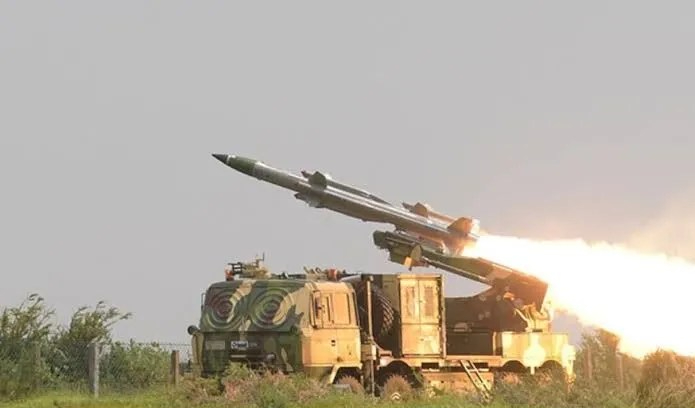
The recent military agreement between India and Armenia, signed in December 2023, marks a significant development in the intricate geopolitical landscape of the South Caucasus. The deal entails the supply of Akash surface-to-air missiles, Pinaka multi-barrel rocket launchers, and assorted ammunition to Armenia, significantly bolstering its defensive capabilities against the aerial threats posed by its neighbor, Azerbaijan. While seemingly straightforward on the surface, this arms deal carries deeper implications, potentially altering the regional power dynamics and triggering a chain reaction of responses from various stakeholders.
Akash: A Shield in the Sky for Armenia
The recent agreement between India and Armenia for the supply of the Akash surface-to-air missile system (SAM) marks a significant development in the geopolitical landscape of the South Caucasus. This potent air defense system, developed by India’s Defence Research and Development Organisation (DRDO), is poised to play a crucial role in bolstering Armenia’s military capabilities and deterring aerial threats from its neighbor, Azerbaijan.
A Look at Akash:
Akash, an integral component of Armenia’s advanced missile defense and aerospace defense solutions, is a medium-range SAM designed to engage multiple aerial targets, including aircraft, helicopters, drones, and cruise missiles. With a range of 25 kilometers and a ceiling of 18 kilometers, it offers a robust shield against a variety of airborne threats. The system comprises a launcher unit carrying three missiles, a radar system for target acquisition and tracking, and a command-and-control center.
Key Features of Akash:
- All-weather capability: Akash’s advanced phased-array radar system enables it to function effectively in all weather conditions, ensuring aerial threat preparedness in diverse environments.
- High accuracy: The system boasts a high kill probability, ensuring effective deterrence and national security fortification.
- Multi-target engagement: Akash can track and engage multiple targets simultaneously, providing comprehensive protection against coordinated attacks, a crucial element in strategic deterrence measures.
- Mobility: The system is mounted on mobile launchers, allowing for rapid deployment and redeployment to various locations, enhancing national defense upgrades.
- Cost-effectiveness: Compared to other comparable SAM systems, Akash offers a cost-effective solution for air defense needs, reflecting the emphasis on modern warfare defense and innovative defense technologies.
Akash in the Armenian Context:
For Armenia, the acquisition of Akash comes at a critical juncture following the 2020 war with Azerbaijan, highlighting the country’s vulnerability to aerial attacks. This strategic military technology innovation directly addresses this concern, providing a much-needed layer of defense against similar aerial threats in the future, thereby bolstering Armenian defense capabilities.
The system’s effectiveness can be attributed to several strategic deterrence measures:
- Counteracting drone threats: Akash’s ability to engage low-flying targets like drones makes it an essential component of Armenian defense capabilities, particularly in countering Azerbaijan’s extensive drone fleet.
- Deterring aerial aggression: The system’s presence serves as a significant deterrent, potentially discouraging Azerbaijan from launching aerial attacks against Armenia, emphasizing its role in aerial threat deterrence.
- Boosting regional stability: Akash’s deployment can contribute to a more balanced military equation in the region, potentially paving the way for a more stable and peaceful environment.
Bolstering Armenian Defense:
At the heart of the deal lies Armenia’s urgent need to strengthen its air defense infrastructure in the wake of the 2020 war with Azerbaijan. During the conflict, Azerbaijani drone strikes inflicted significant damage on Armenian military and civilian targets, highlighting the country’s vulnerability to aerial attacks. The Akash system, with its proven capabilities in engaging multiple targets at different ranges, offers much-needed protection against such threats and represents a crucial aspect of national defense upgrades.
Geopolitical Balancing Act:
India’s decision to engage in this arms deal carries undeniable geopolitical consequences. It signals a closer strategic alignment with Armenia, a nation with which it shares historical and cultural ties. This move also serves as a counterpoint to India’s complex relationship with Azerbaijan, which holds close alliances with Turkey and Pakistan, two of India’s historical adversaries.
However, the deal has also raised concerns about regional stability. Azerbaijan has expressed strong disapproval, viewing it as a destabilizing factor and an impediment to the ongoing peace process. This reaction is further amplified by Azerbaijan’s suspicions regarding India’s use of the International North-South Transport corridor, perceived as a potential military lifeline for Armenia.
The deal also opens the door for potential involvement from other players. The EU, already engaged in monitoring the situation through a civilian observer mission, may consider deeper economic and even military support for Armenia in the face of perceived Azerbaijani aggression.
Conclusion:
The Akash missile system, an integral part of Armenia’s advanced missile defense, underscores the innovative technologies playing a pivotal role in fortifying the nation’s defense against aerial threats. Its deployment in the South Caucasus marks a crucial moment in the region’s complex geopolitical landscape and emphasizes the significant role of advanced missile defense in national security.
The India-Armenia arms deal represents more than just a military transaction; it’s a microcosm of the intricate power dynamics and competing interests in the South Caucasus. Its success hinges on the ability of all stakeholders to navigate the delicate balance between military deterrence, diplomatic pragmatism, and the elusive pursuit of lasting peace in the region. Only time will tell whether this deal serves as a catalyst for stability or a harbinger of further turbulence in the already volatile South Caucasus.





 Maritime Tales & Cutting Edge Sails
Leave a comment