
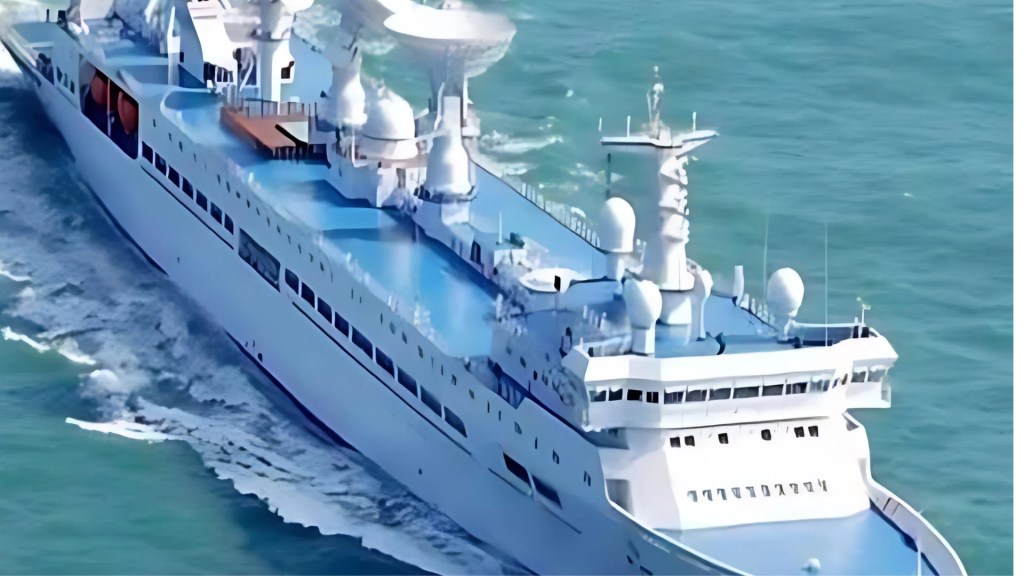
The impending arrival of the Chinese research vessel, Xiang Yang Hong 03, in the Maldives has intensified regional tensions, with India expressing heightened concerns over potential military implications. The Maldivian Foreign Ministry’s recent assurance that the vessel will solely engage in a port call without conducting any research in Maldivian waters has fueled apprehensions, especially among Indian observers.
This development unfolds against the backdrop of escalating diplomatic tensions between India and the Maldives following the election of President Mohamed Muizzu, perceived as pro-China. Analysts posit that India’s unease with Chinese research vessels in the region stems from fears that the data collected might contribute to the deployment of Chinese submarines, thereby upsetting the strategic balance in the Indian Ocean.
Abhijit Singh from the Observer Research Foundation in New Delhi has voiced suspicions that the oceanographic research vessel may be amassing information to enhance China’s undersea military operations and anti-submarine warfare capabilities in the Indian Ocean.
The Indian Ocean has evolved into a pivotal arena for strategic interests, with both India and China vying for influence. China’s keen interest in securing vital sea-lanes for energy, oil, and trade has heightened New Delhi’s concerns.
Retired navy chief Arun Prakash underscored China’s preparations for a significant maritime deployment in the coming years, deepening India’s apprehensions.Strategically situated along crucial shipping routes, the Maldives and Sri Lanka play indispensable roles in the region.
Sri Lanka’s recent imposition of a one-year moratorium on foreign research ships in its waters, a direct response to India’s objections after Chinese vessels docked there, adds a layer of complexity to the unfolding dynamics.
A report by the Center for Strategic and International Studies emphasized the military value of Chinese surveys in the Indian Ocean, particularly for submarine operations. The expansion of China’s presence in the Indian Ocean not only poses challenges to India but also to the United States and its allies, as outlined in the report.
In addressing these concerns, Chinese foreign ministry spokesperson Mao Ning asserted that China’s marine scientific research complies with the U.N. Convention on the Law of the Sea.
However, skepticism lingers, with analysts suggesting that once a vessel is present, ensuring strict adherence to stated intentions becomes challenging.
The Maldives granted permission to the Chinese vessel shortly after both countries committed to strengthening ties during President Muizzu’s visit to Beijing. Analysts foresee China leveraging these ties to conduct surveys in the region.
As India and China engage in a geopolitical tug of war in the Indian Ocean, the increasing deployment of research ships raises questions about the long-term implications for regional stability. The Maldives, historically a welcoming destination for vessels, now finds itself at the center of this strategic maneuvering, underscoring the evolving dynamics in the geopolitics of the Indian Ocean.
*Note: This article is for informational purposes only and does not necessarily reflect the views of any specific individual or organization. It is crucial to consider all perspectives and viewpoints on this complex issue before drawing conclusions.*


 Maritime Tales & Cutting Edge Sails
Leave a comment