
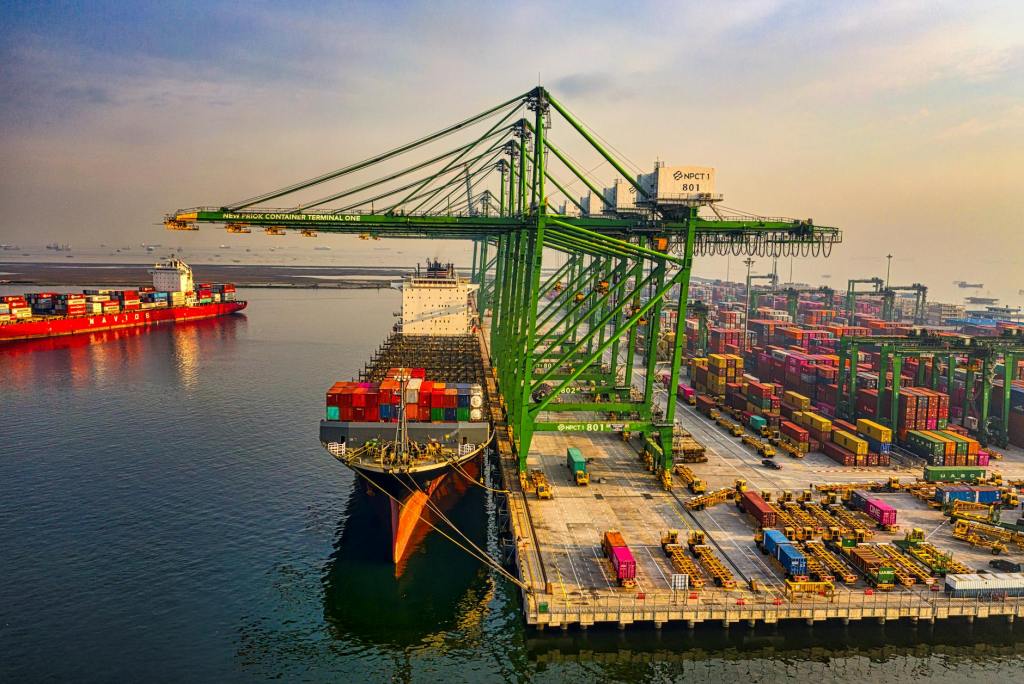
A moment of historical significance unfolded as the MV San Fernando, an immense Maersk vessel with a capacity of 8,000-9,000 TEUs (twenty-foot equivalent units), made its inaugural call at the newly operational Vizhinjam Port in Kerala. The arrival of this modern maritime colossus not only represents the technological advancement in the shipping industry but also underscores the strategic importance of Vizhinjam Port as a pivotal gateway for global trade. This occasion marks a momentous turning point in the history of maritime transportation, emblematic of India’s expanding role in global trade and its aspirations to become a major player in the transportation sector, aligning with the country’s overarching vision for economic growth and international connectivity.
Vizhinjam, India’s inaugural and largest deepwater transshipment terminal, represents a significant achievement in the nation’s maritime infrastructure. Its advanced technologies and cutting-edge facilities distinguish it from other Indian ports and position it as a key player in the global maritime trade network. The transformation of this automated port, made possible by a total investment of Rs 20,000 crore (approximately $2.7 billion USD), signifies a crucial advancement in enhancing India’s competitiveness in the international shipping industry. The port’s accelerated operational timeline, now slated for full functionality by 2028, well ahead of its original 2045 schedule, highlights the remarkable pace of development and underscores the nation’s dedication to driving progress in this pivotal sector. Furthermore, the anticipated reduction in India’s transshipment costs by up to 30%, alongside the estimated annual savings of $1.5 billion, further underscores the port’s significance, not only for the country’s economy but also for the efficiency and cost-effectiveness of global maritime trade routes.
Strategically situated along major shipping routes connecting the US, Europe, Africa, and the Far East, Vizhinjam derives considerable advantage from its geographical location, positioning itself as a pivotal entity in the global maritime trade network. Equipped with cutting-edge facilities and substantial water depth, the port is poised to function as a crucial transshipment hub for the entire region, facilitating seamless trade and connectivity. The projected annual economic impact of over Rs 50,000 crore (approximately $6.7 billion USD) underscores the significant role that Vizhinjam will assume in fostering economic growth and prosperity. Furthermore, the creation of thousands of direct and indirect employment opportunities is anticipated to stimulate socio-economic development in the region, with an additional 5,500 jobs projected to be generated by the year 2028-29, further bolstering the area’s robust employment landscape.
The arrival of the MV San Fernando at India’s inaugural automated port is a momentous occasion, signaling the dawn of a new era characterized by heightened efficiency and modernization within the nation’s maritime sector. With advanced technology and top-notch infrastructure, this port is poised to emerge as a pivotal center for handling a diverse array of cargo, including containers, bulk cargo, and breakbulk cargo. This strategic advancement not only underscores India’s unwavering commitment to establishing itself as a prominent figure in the global maritime arena but also signifies proactive measures aimed at reducing reliance on foreign ports for transshipment. The commissioning of this automated port is anticipated to strengthen India’s standing on the international maritime stage while contributing to its overall economic growth and stability.
As the global landscape continues to undergo transformation, the maritime sector must adjust to emerging realities, including the Fourth Industrial Revolution propelled by digitalization and the growing imperative for sustainable development. With technological advancements, intelligent ports are progressively gaining prominence by incorporating automation and AI to enhance operations and minimize environmental impact. Vizhinjam Port stands as a prominent illustration of this progress, demonstrating the potential for leveraging renewable energy sources and implementing state-of-the-art infrastructure for efficient cargo handling. The accomplishments of Vizhinjam Port will assuredly set the stage for further innovative and environmentally conscious maritime ventures, promoting a sustainable approach to international trade and transportation.
Kerala Chief Minister Pinarayi Vijayan expressed his optimism about the future of the Vizhinjam port, emphasizing its potential to not only become a major hub for other ports but also to significantly contribute to the state’s economic growth. The expansion and development plans for the port indicate a promising outlook, with Adani Ports and SEZ Limited (APSEZ) affirming their confidence in handling 1.5 million TEUs in Phase 1, surpassing the initially expected 1 million TEUs per annum by 50%. As the port continues to evolve and expand, it is expected to create new opportunities for trade, employment, and infrastructure development, further solidifying its significance in the region.


 Maritime Tales & Cutting Edge Sails
Leave a comment