

Your snapshot of transformative developments shaping the maritime world.
1. India’s ₹25,000 Crore Maritime Development Fund: A Bold Leap Toward Self-Reliance
India’s Union Budget 2025 has unveiled a game-changing Maritime Development Fund (MDF) worth ₹25,000 crore (~$3 billion), aimed at revolutionizing domestic shipbuilding, port infrastructure, and green shipping initiatives. Here’s what you need to know:
- Structure: The government will contribute 49% of the corpus, with the remaining 51% sourced from ports and private investors .
- Goals: Boost India’s merchant fleet (currently <10% of its own trade), reduce reliance on foreign vessels (saving $75B/year in leasing costs), and promote green energy-efficient ships .
- Key Policies:
- Shipbuilding Clusters: Dedicated zones for advanced shipbuilding, including LNG-powered and autonomous vessels .
- Tax Incentives: Customs duty exemptions on shipbuilding components extended for 10 years .
- Circular Economy: 40% credit notes for shipbreaking in Indian yards to incentivize recycling and new vessel purchases .
Why it matters: India aims to become a top-five global maritime hub by 2047. This fund could catalyze ₹1.5 lakh crore (~$18B) in investments by 2030, creating thousands of jobs and cutting logistics costs .
2. India-US Autonomous Systems Alliance: Countering China in the Indo-Pacific
The Autonomous Systems Industry Alliance (ASIA)—launched during PM Modi’s visit to Washington—marks a historic shift in Indo-Pacific security dynamics. Key highlights:
- Technologies in Focus:
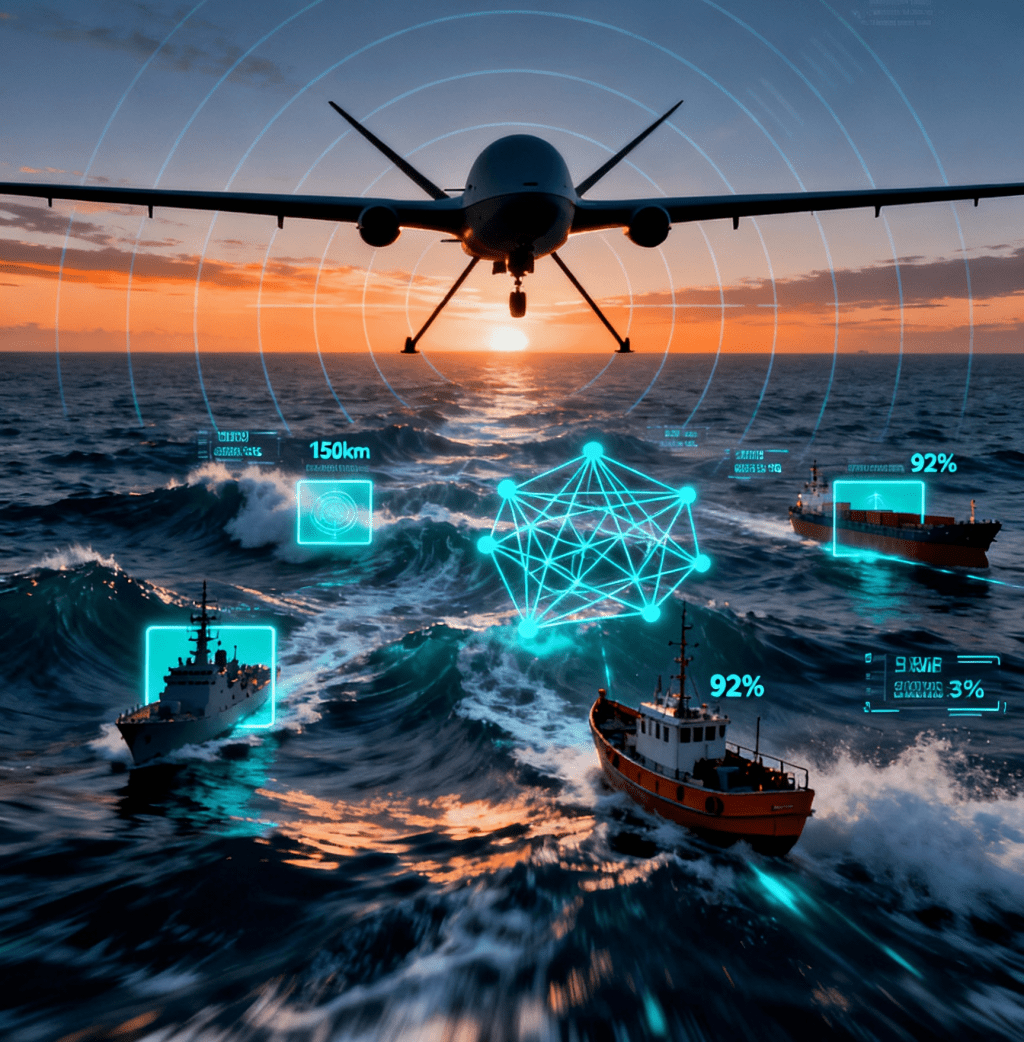
- Wave Glider: Solar/tidal-powered drones (60 to be co-produced with Sagar Defence Engineering) for year-long submarine tracking .
- Sea Picket: Moored surveillance systems with 6-year operational lifespan to monitor ship movements .
- Triton: Dual-mode (surface/underwater) drones for advanced ISR (Intelligence, Surveillance, Reconnaissance) .
- Strategic Impact:
- First-ever US collaboration on sensitive underwater tech with India, targeting China’s growing naval assertiveness .
- Partnerships include Bharat Electronics (BEL) and US firms like L3 Harris for sonar systems .
- Broader Vision: Part of the US-India COMPACT, aiming to double bilateral trade to $500B by 2030 and co-develop AI-driven defense systems .
New Perspective: This alliance isn’t just about hardware—it’s a blueprint for India to absorb cutting-edge AI and robotics expertise, positioning itself as a global defense-tech exporter.
3. Underwater Domain Awareness: The Silent Game-Changer
India and the US are prioritizing Underwater Domain Awareness (UDA) to secure critical sea lanes. Notable developments:
- Quad Synergy: India’s recent acquisitions (P-8I aircraft, MH-60R helicopters) enhance anti-submarine warfare capabilities, aligning with Quad partners .
- Critical Gaps Addressed: Only 2% of global tonnage is Indian-owned, and aging fleets (avg. age 21 years) hinder maritime dominance . The MDF and ASIA aim to reverse this.
- Sustainability Angle: The MDF’s focus on LNG-powered vessels aligns with IMO’s 2050 decarbonization goals, reducing emissions by 30% .
Data Spotlight:
- India’s cargo handling grew just 2.85% annually since 2016-17, but Sagarmala projects (₹5.8 lakh crore investment) aim to triple EXIM trade by 2030 .
- The US plans to supply 6 additional P-8I aircraft to India, expanding maritime surveillance reach .
4. Opportunities for Maritime Professionals
- Skill Development: New shipbuilding clusters will demand naval architects, marine engineers, and AI specialists .
- Entrepreneurship: Startups can leverage the MDF for green tech R&D, port logistics, or coastal tourism infrastructure .
- Global Investors: India’s maritime sector offers untapped potential—ports, LNG terminals, and inland waterways are ripe for FDI .
Final Takeaway
India’s maritime strategy is no longer about catching up—it’s about leapfrogging through innovation and partnerships. The MDF and ASIA alliance signal a dual focus: economic self-reliance and geopolitical muscle-flexing in the Indo-Pacific. For professionals, this is a golden era to engage with sustainable tech, defense collaborations, and infrastructure development.
Stay anchored for tomorrow’s update!
🔗 Sources: Union Budget 2025, US-India Joint Statement, Ministry of Ports, Shipping and Waterways.
📌 Liked this digest? Share your thoughts or tag someone who needs to read this!
 Maritime Tales & Cutting Edge Sails
Leave a comment