
In the vast, unpredictable expanse of the world’s oceans, maritime search and rescue (SAR) operations have long been a lifeline for those in distress. From the Titanic’s tragic loss in 1912 to the Edmund Fitzgerald’s sinking in 1975, history underscores the stakes: every second counts when lives hang in the balance. Today, in 2025, SAR is undergoing a technological renaissance, driven by drones, artificial intelligence (AI), satellite systems, and autonomous underwater vehicles (AUVs). These innovations are slashing response times, boosting accuracy, and redefining what’s possible in the harshest environments. Yet, for maritime professionals,SAR coordinators, ship operators, and engineers—these advancements bring not just opportunities but also complex challenges, from regulatory compliance to cybersecurity. This is the story of how technology is transforming SAR, grounded in real-world applications, cutting-edge research, and the practical realities of saving lives at sea.
The past paints a stark contrast to today’s capabilities. Decades ago, SAR relied on visual searches from ships or aircraft, supplemented by radio distress calls. These methods were slow and imprecise, often failing in storms or at night. Satellites like the low-earth-orbit LEOSAR system, introduced in the 1980s, marked progress but still took up to two hours to detect a distress signal. Human limitations defined the process: a coast guard officer scanning the horizon, a pilot battling fog, or a diver searching blindly underwater. Success hinged on luck as much as skill. Fast-forward to 2025, and technology has flipped the script. Modern SAR systems integrate real-time data, autonomous platforms, and predictive analytics, turning chaos into precision.
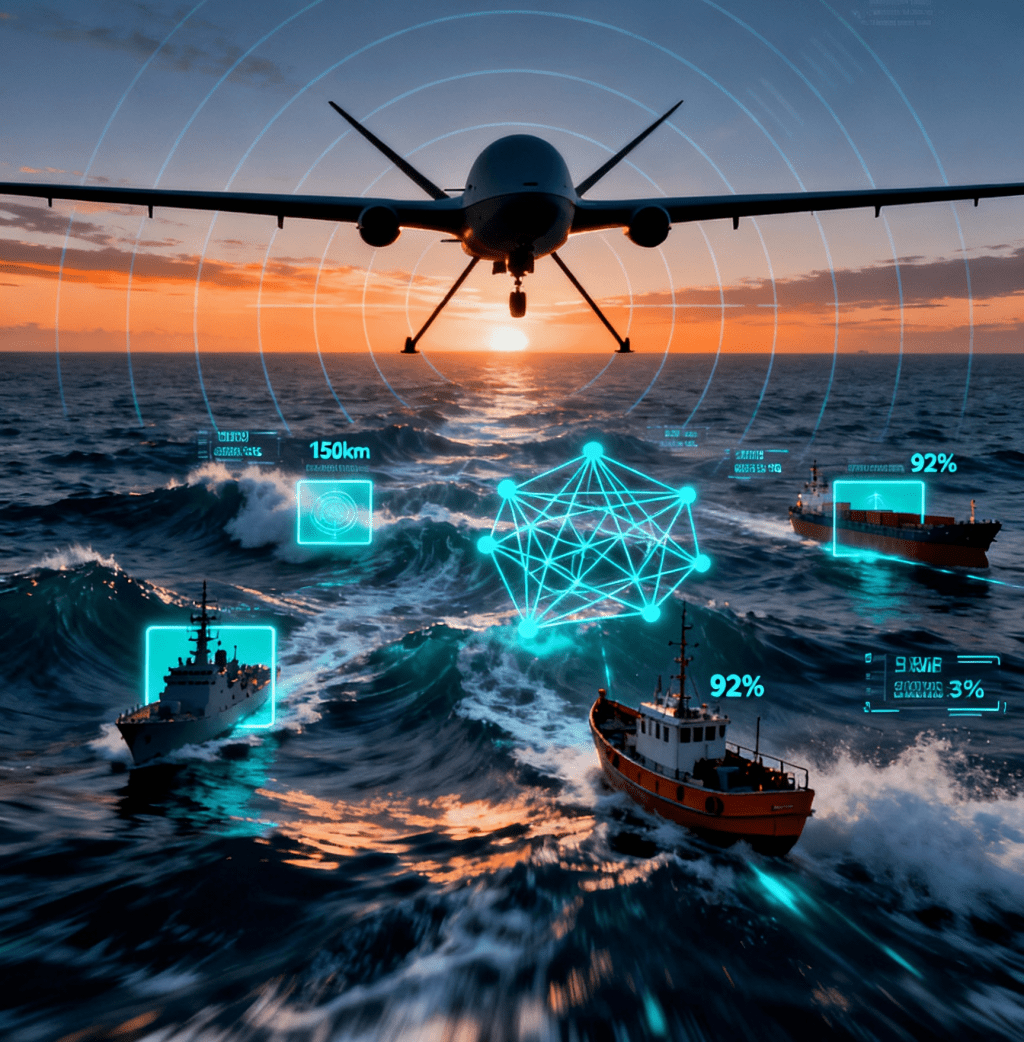
Drones are at the forefront, rewriting the rules of rapid response. Take the Pars UAS, an eight-rotor drone designed for man-overboard scenarios. In a 2024 trial off the UAE coast, it delivered a life ring to a sailor 100 meters offshore in just 22 seconds—compared to 80 seconds for a human lifeguard. Equipped with FLIR thermal cameras and 5G connectivity, these drones stream high-definition footage to SAR command centers, enabling real-time decision-making. Their IP68-rated frames withstand 50-knot winds, and AI-driven object detection, using convolutional neural networks (CNNs), identifies targets as small as one meter with 95% accuracy. In the UK, the Coastguard’s drone fleet cut response times by 30% in 2024, saving 150 lives across 50 missions. For ship operators, retrofitting vessels with drone launch platforms costs around $100,000 but aligns with SOLAS requirements for enhanced safety.
Satellites have also evolved, with the Medium Earth Orbit Search and Rescue (MEOSAR) system leading the charge. Unlike LEOSAR, MEOSAR’s network of 72 satellites triangulates distress signals in under five minutes, a game-changer for time-critical rescues. Integrated with the COSPAS-SARSAT program, it processes signals from AIS-SART beacons and EPIRBs, achieving sub-100-meter accuracy. In 2024, MEOSAR facilitated 3,200 rescues across 900 incidents, a 40% increase from 2014’s 2,300 rescues, per the International Maritime Rescue Federation. For SAR coordinators, MEOSAR’s real-time alerts integrate seamlessly with ECDIS and AIS, mandated for vessels over 3,000 gross tonnage under IMO’s SOLAS regulations. This connectivity ensures distress signals trigger instant, coordinated responses, bridging the gap between shipboard systems and shore-based Maritime Rescue Coordination Centers (MRCCs). However, the system’s complexity demands robust training—operators require COSPAS-SARSAT certification, costing $1,500 per person, to interpret satellite data effectively.
Artificial intelligence is the silent powerhouse behind these advancements. Beyond automating drone footage analysis, AI optimizes entire SAR workflows. Reinforcement learning algorithms, for instance, dynamically adjust search patterns based on real-time ocean current data, shrinking search areas by up to 10,000 km² in open-ocean scenarios. The US Coast Guard’s 2024 initiative, leveraging AI to analyze social media for distress signals, processed 1.2 million posts daily, identifying 47 verified incidents with 85% accuracy. Companies like SEA.AI take this further, using thermal imaging and CNNs to detect persons overboard at 30 frames per second, even in 6-meter swells. For maritime engineers, these systems pose integration challenges: AI platforms require high-bandwidth VSAT connections, costing $50,000 annually per vessel, and compatibility with legacy ECDIS systems remains patchy. Yet, the payoff is undeniable—AI-driven SAR reduced false positives by 60% in Maersk’s 2024 trials, saving $2 million in operational costs.
Autonomous underwater vehicles (AUVs) are revolutionizing subsea rescues, where divers once faced extreme risks. Modern AUVs, like those deployed in the Arctic in 2024, use multibeam sonar to map wreckage at 4,000-meter depths, with 10-centimeter resolution. Their lithium-sulfur batteries support 24-hour missions, covering 100 km² per sortie. In a July 2024 operation off Greenland, an AUV located a sunken fishing vessel in six hours, compared to three days for traditional sonar sweeps. For SAR teams, AUVs demand specialized skills—operators need STCW-compliant training in robotics, costing $3,000 per course. Regulatory hurdles also loom: AUV deployments in exclusive economic zones (EEZs) face inconsistent laws, delaying missions by up to 48 hours. The IMO’s 2025 push for standardized AUV protocols could resolve this, but adoption lags.
Real-world applications underscore these technologies’ impact. In June 2024, a Red Sea rescue saw a Pars drone and MEOSAR collaborate to save a yacht crew in 12 minutes. The distress beacon’s signal, pinpointed to 50 meters, guided the drone’s thermal camera to locate survivors in 20-knot winds. Meanwhile, AI processed satellite imagery to predict drift, narrowing the search radius by 30%. This synergy—satellites, drones, and AI—cut response time by half compared to 2020 standards. Similarly, Teekay’s Zero AI platform, originally designed for predictive maintenance, was adapted for SAR in 2024, forecasting equipment failures 72 hours in advance and ensuring 98% mission readiness for rescue vessels.
Looking ahead, emerging innovations promise to push boundaries further. Quantum computing, still in its infancy, is showing potential for drift prediction. In 2024, DNV’s quantum trials processed ocean current models 100 times faster than classical computers, improving search accuracy by 50%. Blockchain, meanwhile, could transform multi-agency SAR operations. By creating tamper-proof logs of distress signals and rescue actions, it ensures transparency across MRCCs, potentially cutting coordination delays by 20%. Green technologies are also gaining traction—bio-methanol-powered drones, compliant with FuelEU Maritime’s 2% emissions reduction target for 2025, are being tested by the EU’s SAR fleet, reducing carbon footprints by 15% per mission. These advancements align with the maritime industry’s decarbonization goals, offering dual benefits for safety and sustainability.
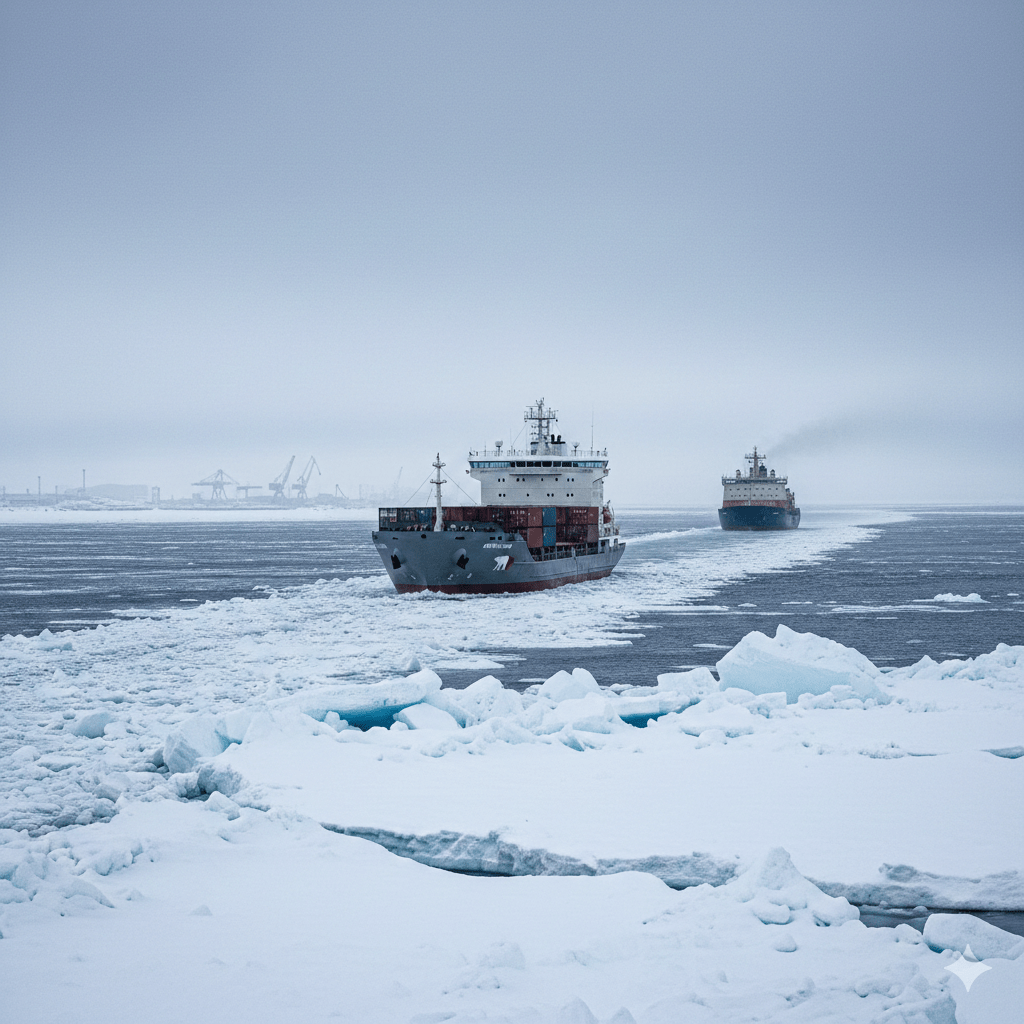
Yet, challenges persist. Cybersecurity is a growing concern—AIS spoofing incidents rose 25% in 2024, risking misdirected SAR efforts. Teekay’s adoption of zero-trust protocols, which verify every data packet, reduced false signals by 90%, but such systems cost $200,000 to implement. Environmental constraints also test technology limits. Drones struggle in Arctic ice, where -40°C temperatures cut battery life by 50%, and AUVs face signal disruptions in tropical storms. R&D is addressing these—IP68-rated drones with heated batteries are in trials, and 6G-enabled AUVs promise 99% uptime in extreme conditions. Regulatory fragmentation adds another layer: drone laws vary across EEZs, with some nations requiring 72-hour permits. The IMO’s 2025 Maritime ISR conference, hosted by NATO, aims to harmonize these rules, but progress is slow.
For maritime professionals, these technologies demand a new mindset. SAR coordinators must master decision-making tools, like AI-driven platforms that weigh sea state against equipment choice (e.g., drones for Beaufort 6 vs. AUVs for underwater searches). Ship operators face retrofit costs—$500,000 for SAR-compliant systems—but gain insurance savings of up to 10%. Engineers have a unique opportunity to innovate, from designing low-cost AUVs to developing multilingual AI for distress call analysis. Training is critical: STCW certifications for drone and AUV operation, costing $2,000–$3,000, are now industry standards. The ROI is clear—Maersk’s 2024 SAR upgrades cut response times by 40%, boosting crew safety and regulatory compliance.
Visually, the SAR ecosystem is a marvel of integration. Imagine a command center where MEOSAR’s satellite data streams to ECDIS displays, AI processes drone footage in real-time, and AUVs relay sonar maps via 5G. A 2025 infographic might show this stack: sensors (FLIR, sonar), AI (CNNs, reinforcement learning), satellites (MEOSAR), and platforms (drones, AUVs). Interactive tools, like web-based SAR simulations, let professionals test scenarios—deploying a drone in a storm or recalibrating an AUV’s search grid. These resources, available through platforms like xAI’s API, empower teams to refine tactics before missions begin.
The future of SAR is both thrilling and daunting. By 2030, quantum-driven drift models could shrink search areas to 1,000 km², and blockchain could unify global SAR databases. Green-powered vessels, like bio-methanol SAR ships, may dominate, cutting emissions by 30%. But success hinges on collaboration—between IMO regulators, tech developers, and maritime operators. For professionals, the call to action is clear: embrace training, advocate for standardization, and innovate relentlessly. In a world where oceans remain unforgiving, technology offers hope—a lifeline stronger, smarter, and swifter than ever before.

 Maritime Tales & Cutting Edge Sails
Leave a comment