
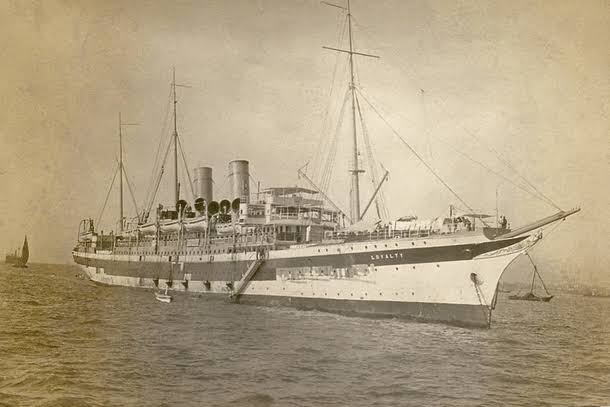
Mumbai, April 5, 1919. The sun hung low over the Arabian Sea, casting a golden sheen on the bustling docks of what was then Bombay. Amid the clamor of stevedores and the creak of cranes, a modest steamship named SS Loyalty slipped its moorings and set sail for London. To the casual observer, it was just another vessel cutting through the waves. But to those who knew its story, it was a floating act of defiance, a bold stroke against the iron grip of British hegemony. At the helm of this audacious venture was Walchand Hirachand, an unassuming industrialist whose name would soon echo through India’s maritime history. Today, more than a century later, that voyage is commemorated every April 5 as National Maritime Day, a testament to one man’s vision and the birth of an Indian shipping legacy.
A Chance Encounter, A Revolutionary Dream
Walchand Hirachand was no seafarer by trade. Born in 1882 in the dusty town of Solapur, Maharashtra, he began his career as a railway contractor, a pragmatic man of modest means with an eye for opportunity. By 1919, the world was emerging from the chaos of World War I, and the British Empire’s economic stranglehold on India remained unshaken. Shipping, a lifeline of global trade, was firmly in the hands of British firms like the British India Steam Navigation Company, led by the formidable Lord Inchcape. Indian attempts to break into this domain with over 100 of them, including a venture by the legendary Jamshedji Tata ,had been crushed by predatory pricing, cartels, and colonial indifference. The sea, it seemed, was a British dominion.
Then came a twist of fate. That year, Walchand stumbled upon an opportunity as unexpected as it was daunting: the Maharaja of Gwalior was selling a steamship, the SS Loyalty, for 25 lakh rupees. Sensing a chance to challenge the status quo, Walchand seized it. With no experience in shipping, he rallied a coalition of like-minded patriots like Narottam Morarjee, Lalubhai Samaldas, and Kilchand Devchand, and raised Rs 4.5 crore through a public offering. It was a staggering sum for the time, a reflection of the faith ordinary Indians placed in this improbable dream. Thus was born the Scindia Steam Navigation Company, a fledgling enterprise with a single ship and a towering ambition: to sail where no Indian firm had endured.
The Voyage That Shook an Empire
The SS Loyalty’s maiden voyage was no mere commercial trip, it was a declaration of intent. On April 5, 1919, as the ship steamed out of Bombay harbor, it carried more than cargo; it bore the hopes of a nation chafing under colonial rule. The British response was swift and ruthless. Lord Inchcape, a titan of imperial shipping, saw the upstart Indian company as a threat to his monopoly. He leaned on his vast network to sabotage the venture, pressuring shippers and passengers to shun the SS Loyalty. Booking offices refused to cooperate, and the ship faced delays at every turn.Walchand, however, was not one to buckle. When British agents blocked access to passengers and cargo, he opened his own booking office. When shippers hesitated, he bought pig iron to fill the hold, ensuring the ship could return to India. The voyage to London stretched into an eight-month odyssey, costing four times the initial budget, but it succeeded. The SS Loyalty returned to Bombay in triumph, a quiet rebuke to the Union Jack. For Walchand, it was proof that Indian ingenuity could outmaneuver imperial might.
A Game of Trust and Triumph
The SS Loyalty’s success was just the beginning. The British doubled down, with port authorities delaying Scindia vessels and Inchcape’s cartel slashing rates to squeeze the newcomer out. The post-war economic boom faded, leaving shipping firms vulnerable. Yet Walchand adapted with the agility of a seasoned chess player. He pivoted to the lucrative Bengal-Burma rice trade, securing a foothold where the British least expected it. When coal supplies were throttled, he founded Eastern Bunkerers Ltd., a coal-handling firm that kept his ships steaming.
His resilience wasn’t just economic, it was political. Walchand cultivated allies in the Indian National Congress, amplifying his cause on the national stage. In 1925, his advocacy bore fruit when Motilal Nehru raised the issue of Indian shipping in the Central Legislative Assembly. The result? The establishment of the Training Ship Dufferin in 1927, a rare concession from a colonial government that had long dismissed Indian aspirations. It was a small victory, but a symbolic one, training a generation of Indian mariners who would one day command their own fleets.
The Man Behind the Mission
Who was this man who dared to defy an empire? Walchand Hirachand was no aristocrat or scholar. He was a self-made industrialist, a Marathi-speaking son of a cloth merchant who turned grit into gold. Before shipping, he had built railway lines and ventured into construction, earning a reputation for tenacity. His foray into shipping was less about profit than principle, a belief that India could stand tall in a world rigged against it. The Scindia Steam Navigation Company outlasted independence in 1947, a rare survivor in a field littered with the wreckage of earlier Indian ventures.
A Legacy Cast in Steel and Saltwater
On April 5, 1964, India officially declared National Maritime Day, honoring the SS Loyalty’s historic voyage. Today, as container ships dwarf the modest steamers of Walchand’s era, his story remains a beacon. It’s a tale of a man who saw the sea not as a barrier, but as a battleground, a place to reclaim India’s dignity one knot at a time. The British Empire is long gone, but the spirit of that 1919 voyage endures, etched into the hull of a nation’s memory.Walchand Hirachand didn’t just build a shipping company; he built a legacy of defiance. Against the tide of colonial oppression, he sailed into history, proving that even the smallest vessel can chart a course through the mightiest storms.



 Maritime Tales & Cutting Edge Sails
Leave a comment