
In the demanding field of maritime operations, precision is essential, and professionals must make important decisions every day. Whether dealing with tricky waters or complex logistics, they often rely on general-purpose AI for help. However, the responses they receive are often unclear and lack the necessary real-time data, local insight, and compliance with maritime standard operating procedures needed to act effectively. This reveals a significant issue for maritime professionals: generic answers are insufficient.
Enter MarineGPT.in, a specialized AI assistant created by a maritime expert with no coding experience. MarineGPT isn’t just another chatbot; it’s designed for the unique challenges of the maritime world. Unlike general-purpose AIs that may provide broad or inaccurate information, MarineGPT.in offers precise, actionable insights for specific maritime situations. It understands the complex language, regulations, and real-time data needed for safe and efficient operations at sea, showcasing shows how deep knowledge in a specific field, combined with AI, can create a tool that excels beyond generalist models.
The Origin – A Professional’s Frustration
For over 13 years, I’ve been serving in the maritime world, building deep expertise in its complex operations, regulations, and challenges. When generalist AI tools like ChatGPT first emerged, I was eager to leverage them for my research, studies, and professional insights. However, I quickly hit a significant roadblock. While these models could produce vast quantities of data, the information often lacked the expert-level depth and non-generic specificity crucial for maritime professionals.
I found that the answers I received were frequently verbose and, more critically, lacked the professional quality and nuanced context required for real-world applications. If I was drafting a report or analyzing a complex scenario, relying on these general models meant the content often fell short. There was a constant need for significant manual research and refinement to bring the output to a usable, professional standard. Asking the AI to be concise often led to a reduction in both the quantity and quality of the output, rather than just a more focused, perfect answer.
This ongoing struggle made me realize there was a significant difference between what generalist AIs provide and what maritime professionals actually need. I was convinced there had to be a solution that could deliver accurate answers, whether brief or detailed, while maintaining high professional standards. This frustration led to the creation of MarineGPT.in.
The Journey – Forging AI for Maritime Industry
My journey into building MarineGPT.in began not with a grand vision of coding, but with a deep familiarity with AI itself. Initially, my knowledge of coding and software development was virtually zero. However, my extensive use of tools like ChatGPT and Bard (now Gemini), to the point where I was frequently exceeding usage limits on pro models, honed my prompt engineering skills. This constant interaction gave me an intimate understanding of how AI models responded and operated. My curiosity was piqued, and I began to ask the AI itself about its inner workings.
I realized that the individuals who built these powerful AI models were experts in their domain, much like I was in the maritime field. This sparked a after drinks thought: with the right guidance and a determined push, I too could learn to build AI assitant from scratch. At that point, I couldn’t even open a terminal or execute a single command line.
The API Paradpox
The first step was encountering the concept of an API. I managed to generate an OpenAI API key and, armed with this, I approached the Google AI model (Gemini). I explicitly stated my goal: “I have an OpenAI key, and I want to develop something like MarineGPT, which gives me answers curated to a specific domain.”
Gemini responded with professional-level instructions that were initially beyond my comprehension. But instead of being deterred, I broke down the complex advice into manageable, bite-sized pieces, tackling one step at a time. This iterative process of learning through conversation and practical application proved incredibly effective. Within just one week, I achieved a significant milestone, I was able to generate text from my own custom queries within a local host environment.
MarineGPT.in
It was around this time that the specific concept of “MarineGPT” began to solidify. I already ran a this website, where I assessed upcoming technology and innovations in the maritime field. This platform, dedicated to exploring the future of maritime, naturally led me to the idea of a specialized maritime AI assistanet for the industry. This vision prompted me to purchase the domain MarineGPT.in , marking the definitive start of the project under its now-familiar name.
With the initial local host setup complete and the vision for MarineGPT solidified, the true “AI building AI” phase began. My lack of traditional coding experience meant that Gemini became my indispensable Socratic partner, mentor, and even my pair-programmer. It was a constant conversation, an iterative dance between my maritime expertise and its coding knowledge.
Node.js for AI
Gemini guided me to use Node.js as the starting point, recommending it for its beginner-friendliness. From there, it meticulously walked me through the fundamentals, initiating a project with npm install, structuring code into route.ts files, correctly placing model names within the code, and even how to instruct the AI backend to deliver responses in a specific order. Each day was a lesson learned, often through a series of failures.
The development process was not without its significant frustrations. Code generated with Gemini’s help would frequently crash due to seemingly minor issues like copy-paste errors or the omission of a single semicolon, a detail I, as a complete novice, didn’t yet understand could wreak havoc. My troubleshooting often involved taking screenshots of error messages and uploading them to Gemini, hoping for a solution. There were times when the AI, in its own understanding, would propose solutions so complex that I’d get lost in the process, sometimes even encountering what felt like AI hallucinations that would lead me down rabbit holes. Each such instance often meant starting over, asking for an alternative approach, and patiently rebuilding. It took considerable time to grasp the intricate correlation between different parts of the code.
The re-occurring failures
Even basic tasks, like creating nested folders in VS Code or correctly naming files, felt like rocket science initially, despite the integrated development environment now feeling user-friendly. Compounding these challenges, the capabilities of “coding partner” AIs in early 2024, like Gemini and Claude, were not as advanced as they are today. Their limited context windows meant that after just a couple of hours, the conversation history would fill up, prompting warnings and forcing me to start a fresh chat, re-explaining the entire project and showing my work from scratch.
Despite the continuous failures and the steep learning curve, my persistence began to pay off. I designed my first formal page layout, a simple interface featuring a MarineGPT header, an input text box, and a message bubble area. There were no fancy buttons or animations; I just told Gemini what I wanted, and it delivered a basic 60-70 line code snippet that perfectly fit my requirements at the time.
Testing AI by AI
From this foundational UI, the testing phase began. I used various generalist AI models, informing them that I had a maritime-domain AI model (MarineGPT.in) for testing. I asked them hundreds of questions from many generalist models and showed them MarineGPT’s answers. I collected their feedback and shared it with my coding partner, Gemini. Together, we refined my core “route” code numerous times. This process continued until MarineGPT.in reliably produced accurate answers to complex maritime queries, which were even praised by the generalist AIs.
Push and Pull
Once MarineGPT was delivering quality responses and I had a basic UI, the next big challenge was moving it from my local machine to the online world. This involved learning the deployment process with Vercel and figuring out GitHub’s git push and git pull commands. It was a tough learning curve, and securing my first production deployment took almost a month. Vercel became an important partner, especially with Gemini giving me clear, step-by-step instructions: “press this, click this, then this.” Problems often came up, leading to a routine where I would share error screenshots; sometimes I’d find a quick fix, but other times, I had to start all over again.
This challenging process occurred after my regular work hours. As the Head of Department responsible for all electrical and electronic systems on the ship, my days were already very busy. Long sailing durations without internet access made it hard to remember my work after returning home, often 11-12 days later. I had to go through old chat logs to regain context and continue my tasks. This back-and-forth approach significantly slowed down my efforts to develop marinegpt.in into the ideal tool I imagined.
The Online Phase
When MarineGPT was finally online, my primary aim wasn’t public indexing or widespread recognition. For me, simply creating something from zero was a monumental achievement. I was aware of other “competitive” models, often bearing similar names and backed by full teams with marketing budgets. However, when I compared the quality of responses from my model to theirs, I didn’t consider them true competition in terms of depth and accuracy. That said, I wasn’t realistically thinking of competing with them in the open market; I simply stood no chance in that arena as a lone developer.
I began sharing the link to marinegpt.in with many minds in my immediate circle. A few greater minds were genuinely impressed, while some offered constructive critique. Others, however, would touch a nerve by asking, “We already have ChatGPT, why this?” This forced me to articulate, repeatedly, the unique value proposition of MarineGPT , why specialization mattered. Yet, only a handful in my closest circle truly understood that I had built this myself; most assumed I was simply promoting it for unknown reasons.

The Feedback
This feedback, even the critical or skeptical remarks, proved invaluable. From user critiques, two major insights emerged: the training data of the smaller models I was using was often a year old, necessitating real-time information, and the need to make answers concise as per the user’s explicit requirement.
For the first challenge, acquiring real-time data, I initially explored options like web scraping with tools like Cheerio. However, this quickly made the code and the entire process excessively complex and unmanageable for a single developer.
Then, to address the issue of answer length and conciseness, I attempted to implement changes in the “route” logic. I tried tuning the AI to judge the exact length of answers required based on user input, defining steps using if-else conditions within router functions. This presented a new set of challenges: if I optimized the model for comprehensive, elaborate answers, it then struggled with multi-hop reasoning queries that required synthesizing information from various parts of a conversation or document. Conversely, if I optimized for multi-hop reasoning, the detailed, elaborate answers suffered. Even the router itself wasn’t perfect; the logic often failed to switch context at the right times, leading to inconsistent or incomplete responses. These internal conflicts highlighted a fundamental limitation in the single-persona, single-logic approach.
The Strengthening
This dilemma lasted for months. I talked about different router logics with Gemini, which had become a stronger code assistant, but nothing worked. We even tried making the AI read its own answers in the backend to choose its next action, along with many other methods. Each router model we created had its limitations. However, this process taught us a lot and led to a key realization: to introduce three distinct modes of operation.
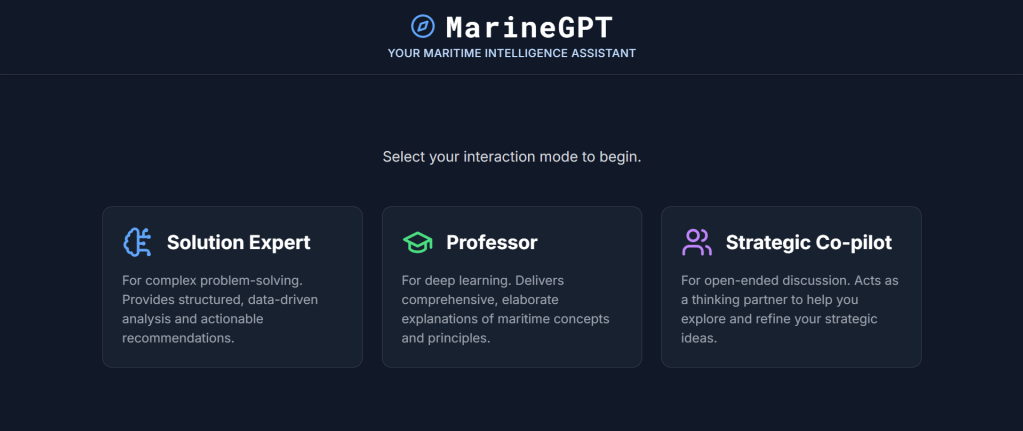
This architectural shift gave birth to:
- The Professor: Designed to provide excellent, comprehensive answers, like a seasoned academic.
- The Co-Pilot: Engineered to engage in conversational dialogue, enquire for clarification, and provide direct answers, acting as a collaborative buddy.
- The Solution Expert: The core of the system, tailored to answer professionally and act as an advisor and teacher, serving as a dedicated maritime companion for complex issues.
This multi-persona approach provided a complete package. Further enhancements included integrating an independent API for live data, ensuring access to the most current information, and adding tools like Math.js to handle critical calculations with precision.
The Breakthrough – The Three Musketeers
The quest for a perfect AI that could handle everything from brief summaries to complex reasoning turned out to be a difficult challenge. After many months of struggling with complicated systems and repeated setbacks, it became evident that a new approach was necessary. Discussions with Gemini led to the realization that instead of forcing one AI to do it all, it was better to create a team of specialized AI agents, each focusing on a specific area of maritime support. This idea gave rise to MarineGPT’s “Three Musketeers” architecture.
This realization created a new approach for marinegpt.in. Instead of one large model managing conflicting demands, the system became a flexible framework where different AI personas could be activated based on the user’s needs. This improved performance and token usage while offering precise domain-specific responses. Additionally, this modular setup allowed for integrating an independent API for live data and external tools like Math.js for important calculations, enabling MarineGPT to provide both theoretical understanding and practical, real-time solutions.
The three distinct personas, working in concert, transform marinegpt.in into an indispensable digital first mate for any maritime professional:
The Co-Pilot: Your Conversational Maritime Buddy
The Co-Pilot is the initial point of interaction, designed to be the user’s conversational “buddy.” Its primary role is to clarify user needs before diving deep into complex solutions. Think of it as the seasoned colleague who asks the right questions to understand the full scope of a problem.
- How it works: When a user inputs a query, the Co-Pilot persona evaluates its clarity. If the query is vague, the Co-Pilot asks simple questions for more details (e.g., “Are you asking about commercial or recreational vessel regulations? Which region?”) to help the user refine their request.
- Purpose in Maritime Domain: This persona helps prevent misunderstandings that can result in dangerous or irrelevant information in critical maritime situations. It ensures AI analysis is accurate and meets the user’s real needs, saving time and avoiding costly mistakes. It’s useful for brainstorming, refining queries, and gathering context in maritime inquiries.
The Solution Expert : The Deep-Thinking Problem-Solver
The Expert Agent is the powerhouse of marinegpt.in, the deep-thinking “super-brain” for complex crises and in-depth analysis. This is where MarineGPT’s specialized training truly shines, providing nuanced, strategic, and actionable insights.
- How it works: After the Co-Pilot understands the user’s intent or if the initial question is specific, the request goes to the Expert Agent. This persona uses MarineGPT’s detailed maritime knowledge, protocols, and regulations. It combines information, reasons through complex issues, and creates clear, professional reports or step-by-step solutions. Its algorithms are designed to provide accurate and relevant output, often including references.
- Purpose in Maritime Domain: This persona is essential for captains requiring detailed voyage planning and risk assessments (such as piracy zones or weather patterns), marine surveyors examining new regulations, or engineers addressing critical issues at sea. It serves as a specialized consultant, offering deep insights that generalist AIs cannot provide.
The Educator: The Maritime Professor
The Educator persona is MarineGPT’s patient “professor,” designed to break down highly technical maritime topics into understandable explanations for cadets, new recruits, or experienced professionals seeking to refresh their knowledge.
- How it works: When a user needs to learn or understand a concept, the Educator persona takes charge. It simplifies complex terms, uses analogies, gives clear explanations, and provides examples. Its aim is to communicate clearly and help users learn effectively.
- Purpose in Maritime Domain: This is essential for training and ongoing professional growth. A cadet learning about MARPOL Annex VI, a seafarer needing to know a new safety procedure, or an experienced officer wanting a refresher on navigation techniques can depend on the Educator for clear and accurate instruction.
The Showdown – A Specialist in a Generalist’s World
While models like Gemini, Grok, and ChatGPT are titans of general knowledge, the true test of MarineGPT lay in its specialization. The goal was to prove that a finely-tuned specialist, born from deep domain expertise, could not only outperform a generalist in its specific niche but fundamentally transform how maritime professionals approach problems.
Use Case 1: The “Serpent Coil” Cybersecurity Crisis – Strategic Command
Note – Please run the queries on MarineGPT.in and other general AI platforms to compare their knowledge and reasoning depth.
The Potent Query (Expert Agent Mode Implied): “Act as the Chief Security Officer (CSO) of a major shipping line. Our vessel, the ‘Serpent Coil,’ currently in the Malacca Strait, reports a sudden, inexplicable GPS deviation of 5 nautical miles. Simultaneously, our IT team detects an attempted login from an unknown IP address trying to access the vessel’s ECDIS via the satellite communication system. We suspect a sophisticated GPS spoofing attack, possibly combined with a breach attempt. Develop an immediate, multi-pronged strategic action plan. Include initial response, communication protocols, long-term mitigation, and considerations for potential motives of the attackers (e.g., piracy, state-sponsored disruption, cargo theft). Provide references to relevant international maritime cybersecurity guidelines (e.g., IMO 2021 guidelines, BIMCO Guidelines).“
Use Case 2: The “Navigator’s Odyssey” – Precision Voyage Planning
Voyage planning is the bedrock of safe and efficient maritime operations, requiring a synthesis of navigational expertise, regulatory compliance, and real-time risk assessment. This use case directly challenges the AI’s ability to act as a true “Co-Pilot” or “Expert Agent” in a complex operational scenario.
The Potent Query (Co-Pilot/Expert Agent Mode Implied): “Act as a Chief Officer planning a multi-leg voyage for a bulk carrier from Singapore to Marseille, via the Suez Canal. The cargo is sensitive to excessive motion. Provide a detailed passage plan considering: latest piracy risk assessments for the Indian Ocean/Gulf of Aden, weather routing options (monsoon season considerations), specific reporting requirements for transit zones (e.g., IRTC, Suez Canal), and recommended Best Management Practices (BMP) for enhanced maritime security. Also, include any relevant industry-standard acronyms and their brief explanation where appropriate.”
Use Case 3: The “OODA Loop & Tower of Hanoi”
I sought to understand the very boundaries of MarineGPT’s nascent “intelligence.” I devised tests that probed abstract reasoning and procedural logic, specifically using a combination of the military decision-making framework, the OODA Loop (Observe, Orient, Decide, Act), and the classic Tower of Hanoi puzzle.
The Potent Query (Expert Agent/Educator Mode Implied, pushing its limits): “Explain the OODA Loop’s application in real-time maritime decision-making, providing a step-by-step breakdown. Then, apply a recursive solution strategy to a 5-disk Tower of Hanoi puzzle, detailing each move and the state of the pegs (Source, Auxiliary, Destination) at every step. Ensure the output strictly adheres to the OODA Loop’s four phases for the initial explanation and then precisely follows the recursive logic for the puzzle.”
MarineGPT.in excelled at explaining the OODA Loop with remarkable clarity and relevance to maritime scenarios, detailing how a captain might use it during a collision avoidance situation or a rapid weather change. It perfectly followed the requested formatting, demonstrating its ability to act as a structured educator and advisor. However, the Tower of Hanoi puzzle revealed a crucial shortcoming in its advanced calculation with reasoning capabilities. While MarineGPT could perfectly understand the concept of the puzzle and the recursive solution method, and even verbalize the rules, it consistently failed to execute the procedural logic correctly beyond a few initial moves. It would “hallucinate” incorrect disk placements or forget previous states, leading to an inaccurate solution for the complete puzzle.
The Revelation and the Path Forward Towards MarineGPT Pro
The Tower of Hanoi is a simple logical puzzle that revealed important insights about MarineGPT’s abilities. It showed that while MarineGPT excels at gathering maritime knowledge and giving specialized advice, its underlying Large Language Model (LLM) has limitations in executing complex algorithms and maintaining logical consistency with abstract problems. This wasn’t a failure but a valuable lesson that led to the creation of an improved model – MarineGPT Pro.
The vision for marinegptpro.com builds upon the robust foundation laid by marinegpt.in, taking its capabilities to an unprecedented level of real-time intelligence and actionable insights. The cornerstone of MarineGPT Pro’s enhanced intelligence will be the strategic adoption of superior library methods like LangGraph. This advanced framework will enable more sophisticated agentic workflows, providing deeper analytics and the capability to visualize complex data through integrated charts and graphs.
Furthermore, MarineGPT Pro will be empowered with multiple, real-time APIs. This means direct integration with:
- Live AIS (Automatic Identification System) data: Offering real-time vessel tracking, identification, and situational awareness.
- Comprehensive Weather data: Providing immediate, hyper-local weather conditions, forecasts, and routing advisories.
- Global News APIs: Delivering the latest geopolitical, industry, and security news relevant to maritime operations.
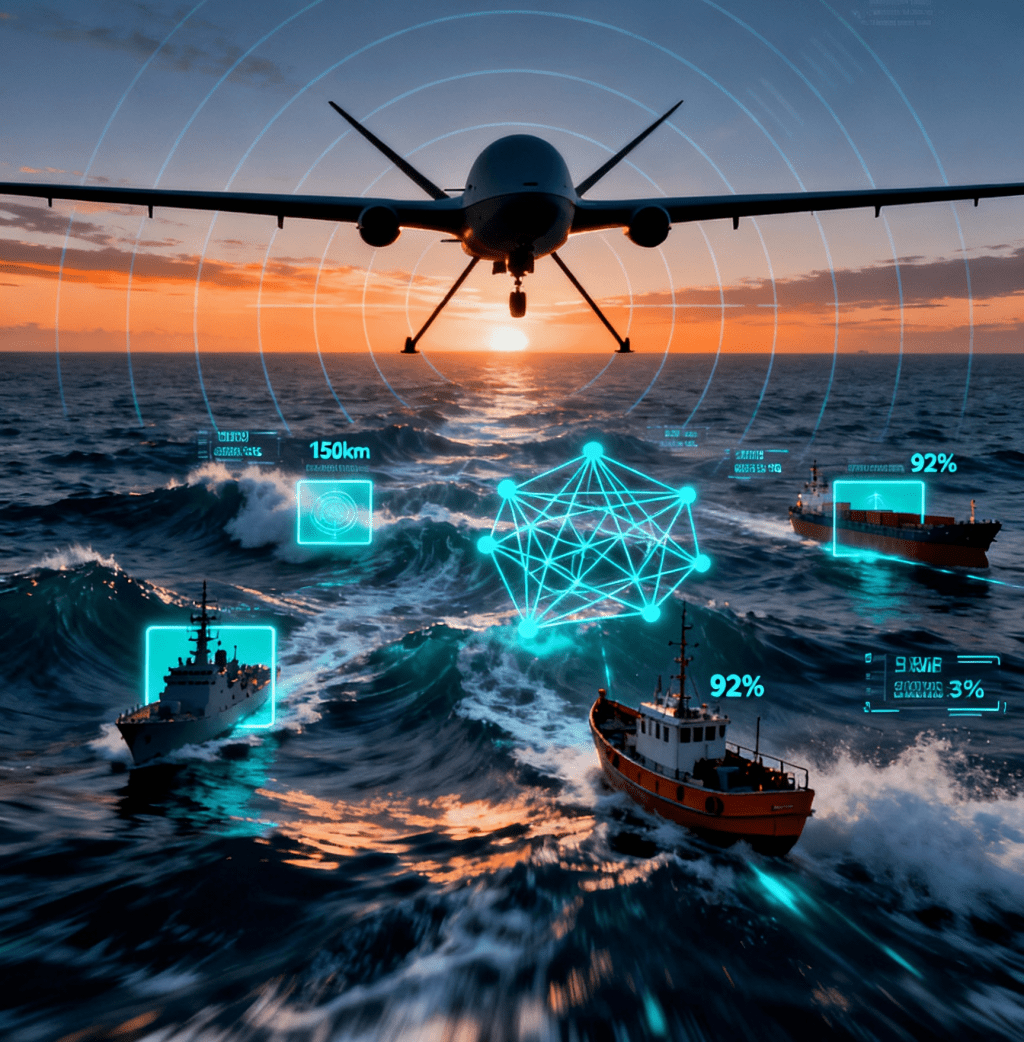
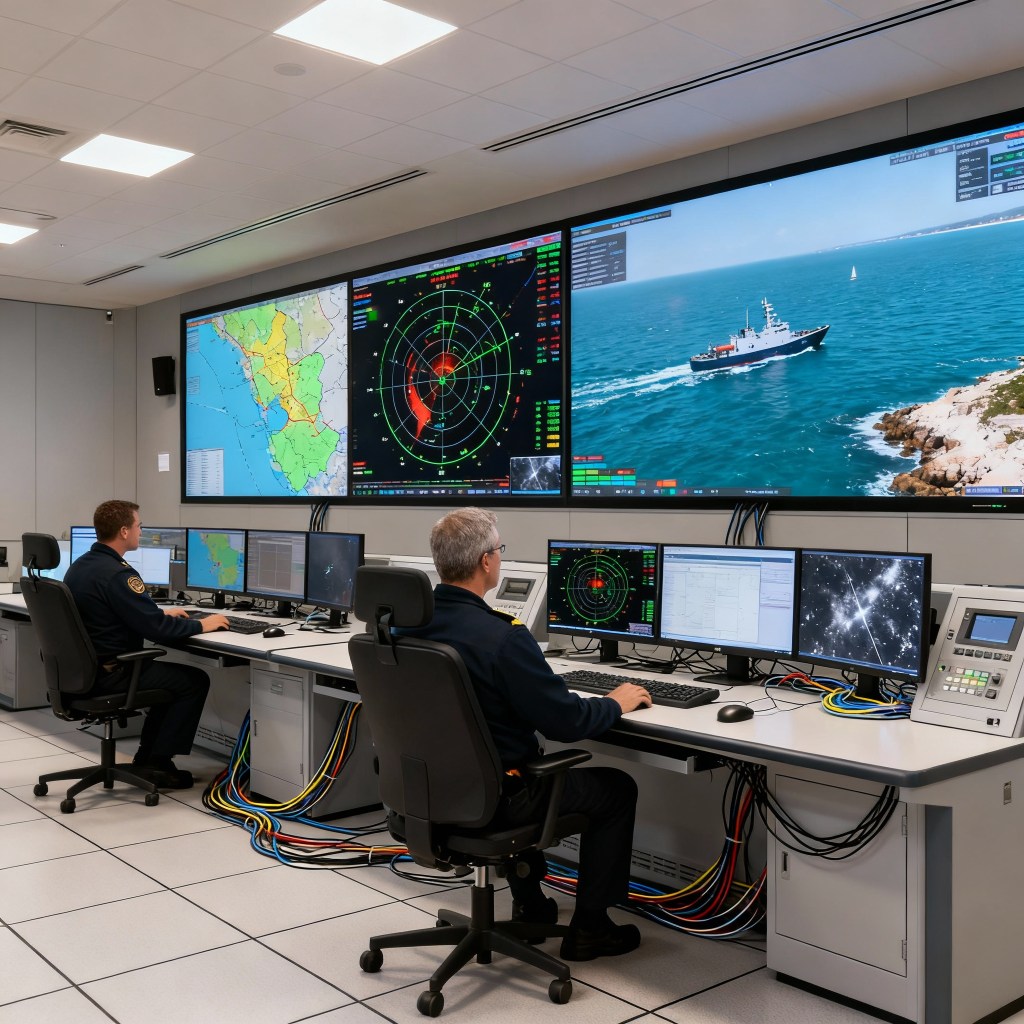
This fusion of real-time data with advanced AI reasoning will unlock a new dimension of deeper market intelligence. MarineGPT Pro aims to be the ultimate platform not only for business operations (e.g., optimizing supply chains, predicting market shifts, identifying emerging trade routes) but also for government and law enforcement agencies requiring a profound, real-time look into maritime activities for security, compliance, and strategic planning.
The domain marinegptpro.com has already been secured, signifying the commitment to this next monumental leap. The primary bottleneck for the full realization of the Pro version currently lies in the funding required for better, dedicated hosting solutions. Such advanced capabilities, demanding immense speed and computational strength for real-time data processing and complex analytics, necessitate a more robust infrastructure than what a single individual can typically self-fund from a salary.
With MarineGPT Pro, the ambition is to solve bigger problems with single-click solutions. It envisions an app-like module system, featuring distinctive, highly specialized tools:
- Route Optimization: Dynamic re-routing based on live weather, piracy threats, and economic factors.
- Barrier Patrols & Surveillance Assist: AI-driven insights for patrol optimization and anomaly detection for security agencies.
- Trend and Pattern Analysis: Identifying emerging patterns in shipping, trade, and maritime incidents in real-time.
MarineGPT Pro will also incorporate a specific AI model dedicated solely to judging output quality and a sophisticated feedback mechanism. This shall ensure continuous self-improvement and maintains the unparalleled accuracy and professionalism that is the hallmark of MarineGPT.
At the Helm – Navigating MarineGPT.in for Expert Insights
Having seen MarineGPT.in’s unique ability to provide useful information, you may wonder: how can a maritime professional use it effectively? This chapter is your practical guide to “At the Helm,” showing how to prompt MarineGPT.in for the best results. It’s more than just a text generator; it’s a problem solver, a guiding teacher, and your partner in navigating the complex world of maritime operations.
The Art of the Prompt: Engaging Your Digital First Mate
MarineGPT.in is a professional tool that rewards clear and specific input. The quality of the output depends on how precise your question is. Unlike general AIs that give vague answers, MarineGPT.in is made to handle detailed, industry-specific situations and provide focused solutions. Its strength is in understanding the complex context of the maritime industry.
For optimal results and to truly leverage the power of specialized AI for maritime professionals, consider your prompt as a set of instructions to your digital first mate. The more context, role, and structure you provide, the more precisely marinegpt.in can “think” and formulate its expert-level response.
Why “Slow” Can Be Superior: The Power of Deliberate Processing
You might notice that sometimes marinegpt.in’s responses, especially for complex, multi-hop queries, aren’t instantaneous. This deliberate pace is a feature, not a bug. It signifies that the underlying AI models are not merely regurgitating pre-existing text. Instead, marinegpt.in is engaged in a deep “thinking” process:
- Synthesizing Complex Information: It’s actively analyzing, cross-referencing, and synthesizing information from its vast, curated maritime knowledge base, protocols, and regulations. This isn’t a quick lookup; it’s a comprehensive internal research process.
- Applying Proprietary Logic: The output is being filtered through MarineGPT’s proprietary algorithms, designed to ensure the answer is not just correct, but also perfectly tailored, actionable, and professional-grade. This involves evaluating multiple potential solutions and selecting the most optimal one.
- Ensuring Domain-Specific Accuracy: Every element of the response is being assessed for its relevance and accuracy within the intricate context of the maritime domain, ensuring the highest standards of professional reliability.
This internal “deliberation” ensures that the answers you receive are not just verbose prose, but genuinely expert insights, ready for immediate application in real-world maritime problem-solving. This is how marinegpt.in provides its curated domain answers and actionable maritime intelligence.
Best Practices for Prompting MarineGPT.in: Your Navigator’s Guide
To harness the full capabilities of marinegpt.in, particularly its Co-Pilot, Expert Agent, and Educator personas, integrate these prompting best practices:
Always begin your query by assigning MarineGPT.in a specific maritime persona. This helps the AI adopt the correct mindset and context.
“Act as a Chief Engineer troubleshooting a main engine fuel pump issue on a VLCC…”
“You are a maritime lawyer specializing in salvage law…”
“Explain to a deck cadet the principles of magnetic compass deviation…”
Provide a Detailed Scenario (Context is King): Don’t just ask a question; present it with a realistic, detailed context. The more specific the scenario, the more tailored and useful the response will be. Include vessel type, location, time-sensitive elements, or any relevant operational parameters.
Given a container ship transiting the Suez Canal in heavy fog, what are the IHO regulations for safe navigation and required reporting?
Describe a firefighting strategy for an engine room fire on an oil tanker.
Guide MarineGPT.in on how you want the information presented. This is crucial for professional applications like reports, plans, or training materials.
Provide a step-by-step ISM Code audit checklist for a bulk carrier, formatted as a markdown table with columns for ‘Item,’ ‘Requirement,’ and ‘Compliance Status.’
Generate a crew training module outline on ballast water management, including learning objectives.
List the top 5 maritime security threats in the Gulf of Guinea and their mitigation strategies, in bullet points.
By following these guidelines, you’re not just typing into a chatbot; you’re collaborating with an AI expert system for maritime solutions, leveraging its specialized knowledge base to gain actionable insights and professional-grade answers for any challenge in the maritime domain.
The Dawn of the Personal Maritime AI Assitant
The journey of MarineGPT.in is a testament to a new idea: combining deep human expertise with the help of Artificial Intelligence. It started with a maritime professional’s frustration with generic information and turned into a specialized AI assistant created from scratch, with no prior coding experience. This was a year-long journey of learning, refining, and working closely with AI.
MarineGPT.in is not just a tool; it acts as a digital extension of a professional’s knowledge and experience through its intelligent personas: the Co-Pilot, the Expert Agent, and the Educator. It has been tested in complex maritime situations like cybersecurity issues and detailed voyage planning and has consistently outperformed larger generalist AI models in this specialized field. This shows that in critical areas like maritime operations, real value comes from precision, understanding context, and following industry-specific protocols, instead of just having broad knowledge.
The candid revelation of MarineGPT’s limitations in abstract logical tasks, like the Tower of Hanoi, was not an ending but a crucial stepping stone. It clarified the path forward, leading to the ambitious vision for MarineGPT Pro (marinegptpro.com). This next-generation platform, poised to integrate real-time AIS, weather, and global news data with advanced AI frameworks like LangGraph, promises to deliver unprecedented market intelligence and single-click solutions for even the most complex maritime challenges.
The story of MarineGPT is not an isolated incident; it is the harbinger of a new paradigm in professional work. It illustrates that the future isn’t just about AI automating tasks, but about human expertise amplified by AI. Experts in every field, be it law, medicine, engineering, finance, or beyond, now have the unprecedented opportunity to forge their own highly specialized AI agents. These personalized AI partners will synthesize vast amounts of domain-specific knowledge, provide hyper-relevant insights, and ultimately, elevate human capabilities to new heights.
The era of the personal AI agent has dawned, and marinegpt.in is proud to be among its pioneering vessels, charting a course towards a future where human ingenuity, powered by intelligent collaboration, truly knows no bounds.
Note:
The MarineGPT.in is presently free and does not even require a login, making it incredibly accessible for users who are looking to engage with marine-related inquiries without the hassle of creating an account. This user-friendly approach allows anyone to explore its features and capabilities effortlessly. As soon as the feedback phase is complete, we will switch to a modest paid version designed to sustain and enhance the service we offer, ensuring that all users continue to benefit from high-quality responses and updates.
We encourage you to take this opportunity to provide valuable feedback and suggestions so that we can improve the platform for everyone.
Your insights are invaluable to us, and you are most welcome to share your thoughts and experiences by reaching out to us at contact@sailorspeaks.com.

 Maritime Tales & Cutting Edge Sails
Leave a comment