
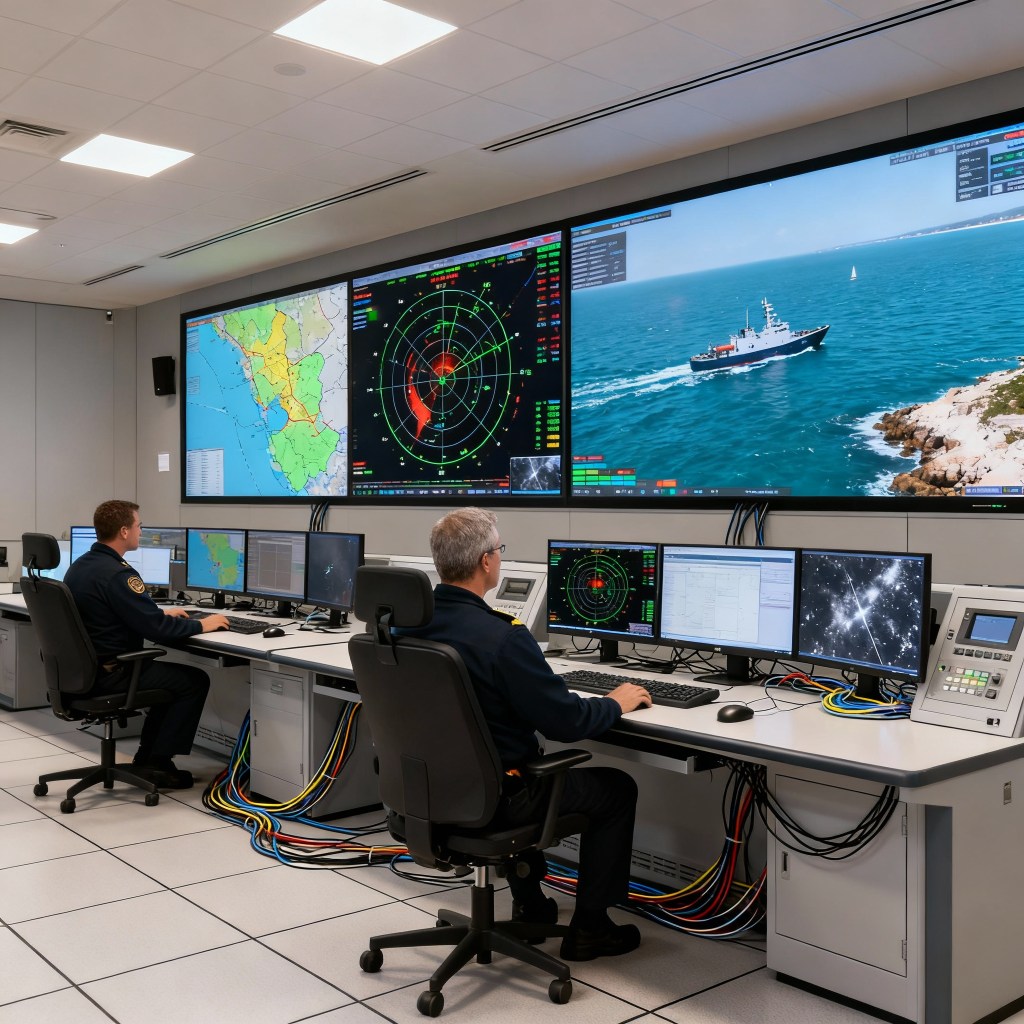
Every year, maritime nations spend millions on the latest surveillance technology, hoping to close security gaps. Yet incidents traced to human error, untrained operators, or neglected maintenance grow in parallel with system sophistication. The more tools at their disposal, the less certain crews become about what works. For many coast guard professionals, the daily reality is not a lack of advanced capability, but the challenge of making those capabilities function in real settings.
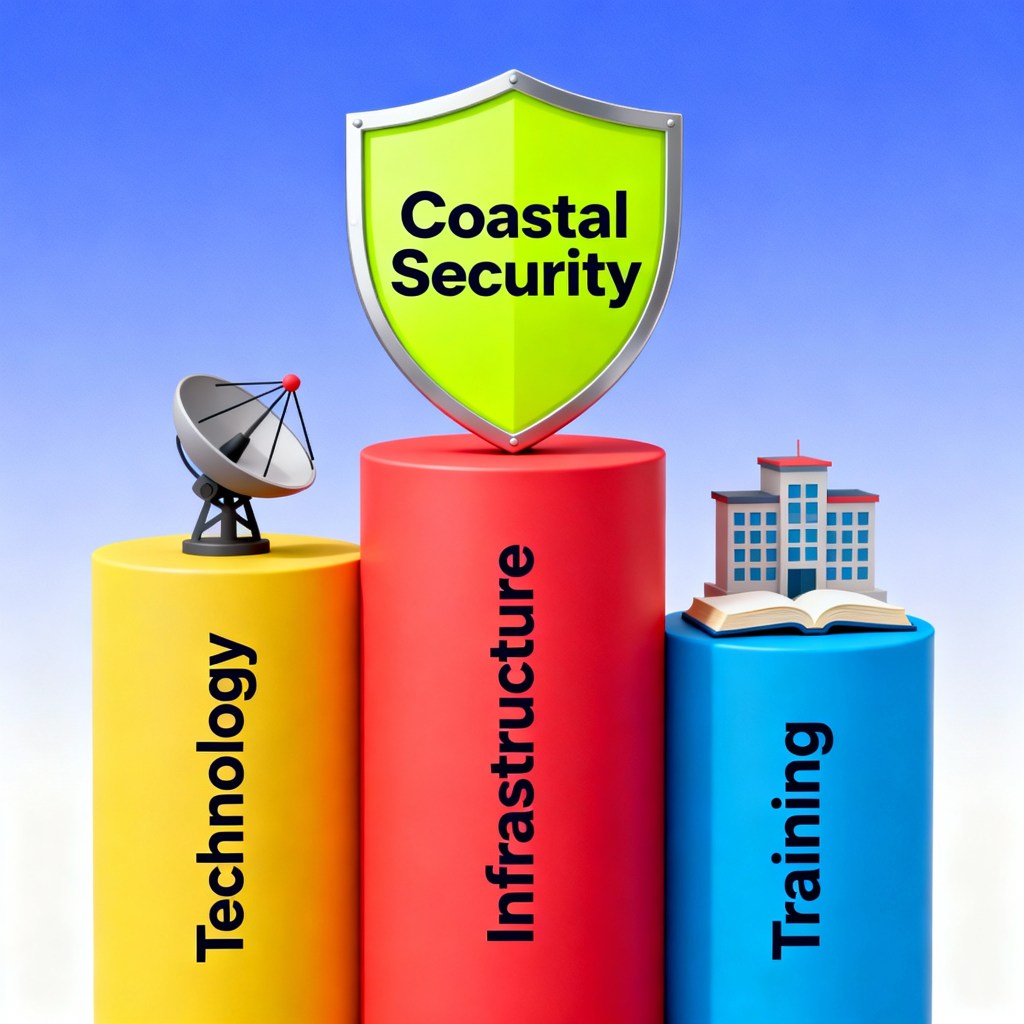
The primary constraint in coastal surveillance is not technological capability but failure to connect infrastructure and training systems with operational needs. Small, well-supported solutions often outperform complex systems when those solutions match the people and processes already in place. This gap between procurement promises and operational reality has three interconnected dimensions: technology that exceeds organizational capacity to deploy it effectively, infrastructure that cannot support the systems it houses, and training programs that lag behind both technological updates and actual operational demands. When any single element fails, the entire surveillance capability degrades. When all three align properly, even modest technology delivers substantial security improvements.
The Technology Challenge as Capability Without Capacity
On paper, the wave of technology pouring into coastal surveillance looks unstoppable. AI-driven analytics, drones, fused sensor arrays, and custom-built monitoring software fill central command rooms with data streams. The pitch is always the same: more information, more automation, more control. Yet in the field, frontline personnel know that a longer checklist on the procurement form rarely translates to stronger watchkeeping.
Real capability growth too often lives in PowerPoint—far from the operational deck. Modern sensor arrays demand new data links, software patches, and constant upgrades. Crew rosters churn, yet training cycles lag behind every update. In larger coordination centers, analysts see a flood of tracks, threat scores, and false positive alarms filling new screens. But integration is patchy. Older radar, worn radios, or slow data links break the seamless digital picture being sold.
System complexity creates practical hurdles. A vessel may sport three different communication suites, but if the satellite modem crashes, all automation is moot. An array of digital charts and live feeds can slow real decisions if operators must juggle new logins, learn a new workflow, or manage system quirks their training never covered.
Redundancy is supposed to be a safeguard, but, in reality, doubling systems often doubles confusion. When one data stream conflicts with another or a “smart alarm” overrides a simple visual cue, doubt freezes response. In some notorious incidents, crews ignored early warnings from simple displays, assuming the high-end alerting system would do their thinking for them.
Cybersecurity reveals another weakness: as attacks on navigation and sensor networks rise, systems are fortified with new digital defenses. But these only work if operators know how to spot, interpret, and log anomalies—something most procurement cycles barely mention.
In some of the most telling operational success stories, simple, small-scale tech has filled the gap. In West Africa, community patrols armed with GPS trackers and reliable radios have made illegal fishing riskier than ever—at a tiny fraction of the cost of grounded hi-tech gunboats waiting for spare parts. In one ship incident, a minor software tweak—adding a timing buffer to the vessel monitoring data—allowed an entire fleet to avoid a piracy hotspot. These are not high-profile systems, but they work because real crews can maintain and understand them.
The lesson cuts through every program review: pure sophistication, unmanaged, starts to erode rather than boost security. More equipment, more features, and more data do not automatically mean more safety for the coastline—unless every piece is matched to the capacity and training of the people who must keep watch.
Infrastructure Gaps & The Invisible Constraint
Infrastructure sits beneath every operational success or failure, yet it gets the least attention in procurement discussions. While agencies debate sensor specifications and software features, the underlying systems that power, connect, and maintain surveillance capability quietly determine what actually works when the watch changes.
Physical infrastructure creates the most basic constraints. Remote sensor stations need reliable power, but coastal environments destroy generators and solar panels. Communication networks must carry data from scattered observation points to central commands, but bandwidth limitations and weather interference break the chain. Maintenance facilities and supply logistics determine how long expensive equipment stays operational, yet these mundane requirements rarely appear in capability assessments.
The power problem alone cripples many installations. Diesel generators require fuel deliveries to remote sites. Solar arrays work until salt spray corrodes connections or storms damage panels. Grid power, where available, suffers outages that take surveillance systems offline precisely when conditions are most dangerous. Backup systems add cost and complexity, creating new failure points.
Communication infrastructure presents equally stubborn challenges. Satellite links work when clear, but weather interferes with transmission. Radio networks depend on repeater stations that need their own power and maintenance. Fiber optic cables offer high bandwidth but require physical protection from anchors, fishing gear, and natural disasters. Every break in the communication chain creates blind spots in surveillance coverage.
Maintenance infrastructure determines system lifespan more than initial quality. Electronic components fail in marine environments. Spare parts must reach remote locations quickly. Repair technicians need transport to scattered installations. Simple problems become expensive failures when the support infrastructure cannot respond effectively.
Data infrastructure problems multiply these physical constraints. Different agencies use incompatible data formats. Legacy systems cannot communicate with new platforms. Cloud processing requires bandwidth that remote locations lack. Real-time analysis demands computing power that exceeds local capacity. Information sits in separate databases while operators need integrated pictures.
Organizational infrastructure shapes how well physical and data systems function. Command center effectiveness depends on clear authority structures, defined protocols, and trained personnel. Cross-agency coordination requires formal agreements, shared procedures, and regular communication. Without proper organizational infrastructure, the best technology delivers fragmented results.
Yet small infrastructure changes have produced remarkable results. Mobile surveillance platforms eliminate fixed infrastructure dependence. Solar-powered sensor networks with local data storage work around communication gaps. Modular systems scale up or down based on actual requirements rather than theoretical capability. Simple data-sharing protocols connect existing systems without expensive replacement.
One telling case involves mobile coastal monitoring units that operate independently for weeks. These platforms carry their own power generation, communication equipment, and basic maintenance supplies. Rather than depend on shore-based infrastructure, they bring capability directly to the surveillance area. Detection coverage improves because platforms position where needed, not where infrastructure exists.
Data-sharing success stories follow similar patterns. Instead of building new surveillance networks, agencies have connected existing systems through simple information protocols. Shared databases let different platforms contribute to common operational pictures. Real-time alerts flow between agencies that previously operated in isolation. The technology was already present; infrastructure integration made it useful.
Regional coordination centers demonstrate organizational infrastructure value. Rather than duplicate capabilities, neighboring countries share surveillance data and coordinate responses. Common communication protocols let different national systems work together. Shared training and procedures improve cross-border cooperation. Small organizational changes multiply individual national capabilities.
The pattern holds across different environments and threat types: infrastructure determines whether technology delivers operational value. Sophisticated systems fail without adequate infrastructure support. Simple systems succeed when infrastructure aligns with their requirements. The most advanced surveillance capability means nothing if power fails, communications break, or organizational confusion prevents effective response.
Where Systems Fail
Modern surveillance systems promise point-and-click ease and automation. The reality in watch centers and on patrol decks is different. Training—when approached as an afterthought—turns sophisticated technology into little more than an expensive backdrop. The shortfall is visible everywhere: in barely used features, risky workarounds, idle equipment, and the subtle drift from best practice to “what works for now.”
The skills gap stretches in three directions. First, technical operation: new tools require fluency in digital interfaces, sensor calibration, software troubleshooting. Many frontline operators are handed manuals, not hands-on experience. Second, tactical employment: knowing when and how to use a tool demands judgment grounded in real scenarios, not simulations. The operator with a dozen feeds and alarms still relies on gut sense when chasing a radar blip or deciding whether a track is hostile, legal, or just lost. Third, maintenance competency: even the best equipment degrades. In many regions, half the patrol fleet sits awaiting minor repairs, either for lack of spares or mechanics trained on new models instead of the last generation’s hardware.
Training infrastructure is often out of sync with field realities. Procurement cycles expect rapid induction; training plans lag behind, copied from older systems or squeezed by budget constraints. Updates come faster—software refreshes, new algorithm drops than retraining can possibly keep up. Some operators are taught once, then left to improvise as systems evolve beyond their original manuals.
Workforce shortages spread the problem. Analysts with skill in fusing video, radar, AIS tracks, and intelligence—aren’t cheap or abundant. In many settings, one person works two or three positions on a watch, trading depth for coverage. Even when agencies ramp up basic intake courses, advanced simulation and scenario-driven refreshers lag behind.
Operational consequences show fast. Frontline users skip “advanced” functions and play things safe, turning off complex features that generate false alarms. Equipment degrades faster when minor issues go unaddressed—because reporting a bug means downtime, more paperwork, or a call to someone who’s never trained on that install. In the worst cases, critical tools are quietly sidelined in favor of workarounds familiar from years past—raising risk and erasing the gains technology promised.
Sometimes, the best innovations are those that assume minimal retraining. Simple navigation cameras, for example, bolted onto patrol boats have cut collision incidents sharply, not because the tech is advanced, but because it solves a problem in a way every crew member can master in a day. A role-specific, modular training program, focusing on tasks rather than general theory, maintains readiness better than big-bang courses at handover or initial system rollout.
Training that works now takes new forms. The most effective programs deliver:
- Fast, modular refreshers linked to each system update
- Onboard simulation tools letting crews drill scenarios off-shift
- Maintenance cross-training—so users spot early hardware/software issues and solve them themselves
- Hands-on mentorship: pairing new recruits with veterans to bridge knowledge gaps that no manual can fill
Countries and agencies, recognizing the problem, start to make training a core part of procurement. Some now insist that system contracts include multiyear training support, not just an initial package. Watchfloors with dedicated “tech champions”—operators with specialized training and authority to lead on system troubleshooting—see fewer avoidable failures and better adoption of advanced features.
Above all, the shift is away from thinking of training as a box to tick, towards treating it as a running investment. No system remains static; neither should the learning curve of those who operate and maintain it. The future of coastal surveillance depends as much on the knowledge and adaptability of its people as on any advance in hardware or software.
The Interconnection with Multiplying or Nullifying Capability
Operational success in coastal surveillance doesn’t hinge on a single breakthrough. It depends on how technology, infrastructure, and training reinforce each other, or—when misaligned—cancel each other’s gains.
When a small team pilots a modular radar unit, fully briefed on its quirks and based in a spot with stable power and fast comms, detection rates double overnight. A new digital system coupled with real-time cross-agency data sharing turns confusion into coordination. Skilled operators, backed by strong logistics and clear authority, extract every last ounce of value from even modest tech.
These are positive feedback loops. Each system, asset, or protocol, when understood and supported, amplifies the others. The results show up in faster response times, lower false positive rates, better maintenance numbers, and—most importantly—higher confidence across all ranks.
But the cascade can run the other way. Advanced technology dumped into a weak infrastructure grid or handed over without training leads to silent screens, broken links, and operational drift. Crews forced to work with new systems in familiar old ways create dangerous workarounds. Untrained users attempt quick fixes and disable features they don’t understand—sometimes causing more risk than the threats the gear was supposed to manage. Fleet managers count idle vessels and unused cameras, and morale slips.
Maintenance reveals the full picture. Patrol boats rust in port when supply chains falter (infrastructure), parts are missing, or mechanics lack the know-how (training). The latest sensors provide nothing when installed on headlands without reliable power. Even the simplest navigation aids, if misunderstood, encourage risky shortcuts.
Every failure—or every unexpected win—traces back to the sum, not the parts. Weakness in any area handicaps the others. But, where even basic technology, matched with stable infrastructure and repeatable, targeted training, changes habits and boosts outcomes, the system performs beyond the sum of its pieces.
The lesson for coast guard professionals: persistent attention to how technologies, infrastructures, and human skills connect and sustain each other yields results. Overlook one, and the whole mission stumbles. Strengthen all three, and the difference reaches far beyond any new procurement cycle.
Strategic and Operational Recommendations
Bridging the human-machine gap requires focused action at both the policy table and on the ops floor. Technology, infrastructure, and training only deliver together if every level—leadership down to watchstander—sees them as part of the same system.
Strategic actions:
- Reverse the usual procurement order. Start by defining clear operational requirements grounded in real threats and local experience—not specs alone. Build a training pathway mapped to those needs. Only then choose technologies that match workforce skill and available support.
- Carve out budget for training and infrastructure at the start. A practical model: allocate roughly equal funds to hardware, supporting infrastructure, and ongoing training and maintenance. Capital gear is only as valuable as its supporting base.
- Shift adoption timelines. Demand readiness metrics—not delivery quantities—as milestones: no “commissioned” system until users can demonstrate full operation, not just power-up.
- Involve operators early. Testing phases should include end users, system maintainers, and trainers. Real feedback at this stage is more valuable than any factory acceptance checklist.
Operational steps:
- Evaluate new systems by maintenance profile and training burden as closely as by sensor range or alarm speed. Opt for tools that can be kept running and understood locally, not just in the capital’s main control room.
- Require infrastructure audits before any new deployment. Communication, power, spare parts, and repair access must be confirmed in the field, not only on paper.
- Mandate modular training that updates every time software or procedures change. Use digital simulations and localized problem drills to bypass downtime and streamline learning.
- Appoint technical champions—field personnel with extra training and the mandate to both troubleshoot and mentor.
Practical principles for enduring gains:
- Scale complexity with readiness. Pilot a flexible, lower-tech option before scaling up. Add new layers of tech as crew and infrastructure capacity increases.
- Piggyback information-sharing systems (even if basic) onto existing comms. Many “gaps” close not with new sensors, but with simple open channels and regular protocols.
- Build maintenance and training lifecycle support into every system contract—not just upfront installation.
Case studies show that with this mindset, even modest tech ends up punching above its weight, while expensive systems often underdeliver when these safeguards get skipped.
Conclusion
Coastal surveillance today is shaped less by what technology can promise and more by how people, systems, and support connect in practice. Hardware and software alone don’t solve security—far from it. The biggest difference is made when small, smart choices match real crews, real environments, and real threats.
The recurring lesson is clear. Training must run with every system, not just follow behind it. Infrastructure needs constant upkeep and should scale with changing requirements, not stand still. Technology should be selected for what it enables in the hands of its users—not just for what looks appealing in procurement trials.
When these three elements work together, even basic tech becomes a force multiplier. Where one is neglected, expensive upgrades fail and operational confidence erodes. The most practical advances in surveillance—sometimes just a well-placed camera, a local data-sharing protocol, or a technical mentor on watch—have delivered more safety and certainty than entire fleets of advanced but idle systems.
Every maritime security professional understands this intuitively: solutions worth their cost are those that crews maintain, operate, and improve. Leadership and policy must stay grounded in this operational truth if technology is ever going to close the security gaps it was purchased to address.


 Maritime Tales & Cutting Edge Sails
Leave a comment